
Hand-Blown Wine Glass Tolerances: Buyer QC Guide
The short answer
Hand-blown wine glasses should not be judged by whether every piece is identical. They should be judged against a written, measurable acceptance standard that protects function, presentation and brand positioning while allowing controlled handmade variation. Before production, buyer and factory should agree how weight, capacity, height, stem, rim, foot and appearance will be measured; what range is acceptable; and which defects require rejection.
1. Why one perfect sample is not enough
A single showroom-quality sample can define the desired look, but it cannot show the natural spread of manual production. In hand blowing, the artisan gathers, shapes, stretches, joins and finishes hot glass through a series of controlled manual operations. Small differences may appear in wall distribution, bowl profile, stem pull, foot diameter and finished weight even when the same design is followed.
For B2B approval, request a representative sample set or pilot batch rather than approving only the most attractive piece. Measure every sample using the same method. The resulting data helps the buyer distinguish three things: the target or nominal value, the variation the process can normally hold, and the commercial limits the market will accept. These are related, but they are not automatically the same.
When shortlisting shapes, review the available handcrafted and machine-made wine glass range and tell the supplier which characteristics are essential to the collection. A narrow visual brief is easier to translate into measurable approval criteria.
2. Build the specification around critical-to-quality characteristics
The specification should focus on characteristics that change how the product works, packs or looks in a set. Do not add tight numbers simply because they appear professional. Every limit should have a buyer reason and a repeatable measurement method.
Characteristic |
Why it matters |
Practical inspection method |
Acceptance approach |
Weight |
Affects perceived lightness, handling and set uniformity |
Calibrated scale; dry glass; same units |
Set a nominal target and agreed range from approved samples |
Capacity |
Controls serving volume and product claims |
Measure to a defined fill point with a stated method |
Define the fill point; do not mix brimful and working capacity |
Overall height |
Affects shelf fit, packaging and visual alignment |
Flat surface and height gauge or agreed measuring tool |
Use a range that protects packing and set appearance |
Stem |
Influences balance, appearance and breakage risk |
Check length, diameter, straightness and bowl-to-foot alignment |
Separate dimensional variation from visible lean or weak joins |
Rim |
Directly affects drinking feel and safety |
Inspect thickness, roundness, smoothness and chips under good light |
Treat sharpness, chips and cracks separately from minor thickness variation |
Foot |
Controls stability and table contact |
Place on a flat reference surface; check diameter and rocking |
Define acceptable stability and visual centering |
3. Define weight and capacity correctly
Weight
Weight is a useful control point because it can reveal variation in the bowl, stem or foot, but it does not identify where the glass differs. A piece may meet the total-weight range and still have a heavy foot or an unusually thin bowl. Use weight as one indicator together with dimensions and visual inspection, not as a substitute for them.
Capacity
Capacity creates disputes when the fill point is unclear. “Capacity” may mean volume to the brim, volume to a marked line or a recommended serving volume. State which definition applies and describe the test method. Keep the glass level, use the same liquid and measuring equipment, and avoid rounding inconsistently between milliliters and ounces.
4. Inspect the stem as a system, not one dimension
A premium stem must look balanced from several viewing angles and must connect cleanly to both bowl and foot. Measure stem length and diameter where the specification says, but also inspect straightness, centering, transition shape and the joins. A straight stem can still appear off-center if the bowl or foot is misaligned.
Stem inspection checklist
- View the glass upright against a simple vertical reference and rotate it slowly.
- Check whether the bowl, stem and foot share the intended centerline.
- Measure stem length from clearly defined reference points.
- Measure diameter at the agreed location; a tapered stem needs a specified point.
- Inspect bowl-to-stem and stem-to-foot transitions for abrupt lumps, cracks or weak-looking joins.
- Place several glasses side by side to judge set-level visual consistency.
5. Separate rim safety from rim aesthetics
The rim is the most sensitive user-contact area. Safety-related conditions—such as a sharp edge, chip or crack—should be classified separately from aesthetic variation. Minor differences in rim thickness or roundness may be commercially acceptable if they remain within the approved handmade character and do not affect drinking comfort, packaging or the brand presentation.
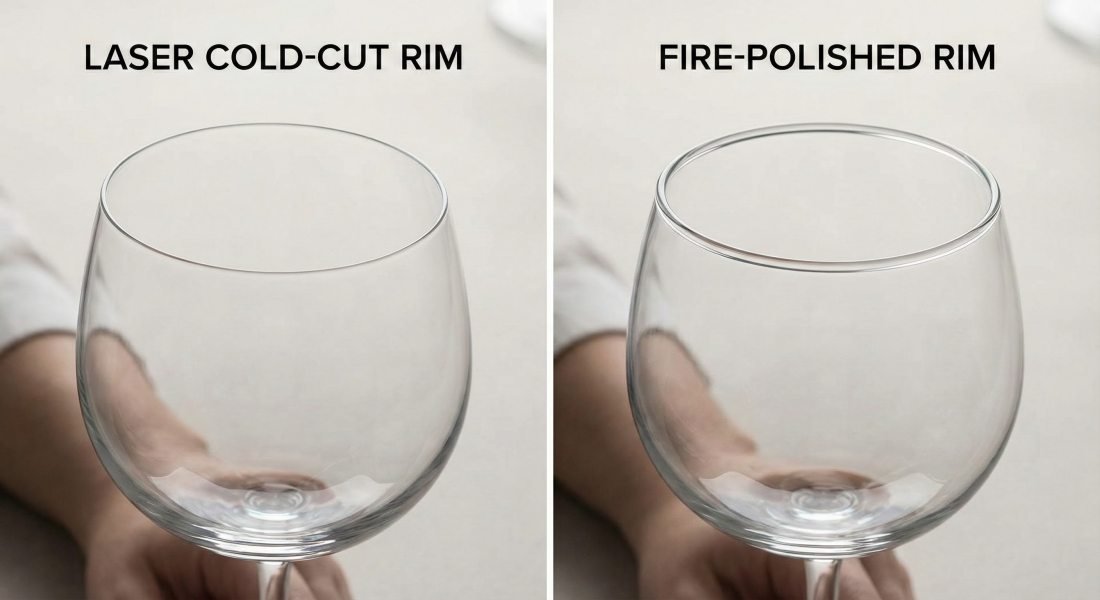
Specify whether the rim is cut and polished, fire-finished or created by another agreed method. Define where thickness is measured and how many points around the circumference are checked. Inspect under controlled lighting and by touch only through a safe, agreed procedure. Never ask an inspector to run an unprotected finger over a suspected sharp defect.
6. Decide what is natural variation and what is a defect
“Handmade” should not become a blanket excuse, and “identical” should not become an impossible demand. The approval file should include photographs or physical limit samples for recurring visual questions.
Observation |
Possible treatment |
Buyer decision needed |
Small variation in bowl profile |
May express handmade character |
Define the visual limit for a matched set |
Minor seed or small bubble |
May be acceptable depending on grade and visibility |
Set size, location and frequency rules |
Visible lean or off-center assembly |
May damage presentation or packing fit |
Define alignment method and rejection threshold |
Sharp rim, chip or crack |
Safety-related nonconformity |
Classify clearly and reject according to the agreed plan |
Rocking foot |
Functional and display concern |
Use a flat reference surface and agreed stability rule |
Decoration shift |
Not inherent to hand blowing |
Control separately against approved artwork and position |
Classify defects by consequence: safety and function, major brand or packing impact, and minor appearance. The buyer’s inspection plan should state how each class is sampled and accepted. Do not wait until shipment to decide whether a bubble, lean or weight difference is “normal.”
7. Turn samples into a usable golden-sample system
A golden sample should be connected to a controlled specification, not kept as an unlabelled glass on a shelf. Mark the model, sample date and specification revision. Record measurements, photograph key views and note any visible variation that was intentionally accepted. When practical, buyer and factory should retain matching approved samples.
8. Design the inspection plan before mass production
- List every measurable characteristic with its nominal value, lower and upper limits, units and measuring point.
- Define the instrument or method, including the capacity fill point and foot-stability surface.
- Create visual defect examples and assign each to an agreed defect class.
- State the sampling plan and acceptance rule for each class without changing it after results are known.
- Link the inspection sheet to the approved sample and specification revision.
- Require deviation approval before production continues when results fall outside the agreed standard.
Review DM Glassware’s manufacturing and quality-control overview when planning the control points, then confirm the exact checks and records that will apply to your own order.
9. Use process choice as a response to the specification
Hand-blown production is appropriate when the product’s premium character, design freedom or lower starting volume matters more than the lowest unit price and ultra-tight uniformity. Machine-made production may be the better route when a large recurring program requires narrower dimensional spread and predictable packing at scale.
The supplier should review the requested tolerance before confirming the process. If the brand requires a limit that the manual operation cannot hold reliably, the honest options are to widen the tolerance, change the design, add a sorting step or consider a machine-made alternative. Hiding the conflict until final inspection creates avoidable rework and delay.
10. RFQ and approval checklist for buyers
- Product reference, intended market, use case and target price position.
- Material, bowl shape, capacity definition, overall height, weight and foot dimensions.
- Stem length, diameter, measuring points, straightness and alignment requirements.
- Rim type, thickness measurement, smoothness and unacceptable safety defects.
- Visual rules for bubbles, seeds, tool marks, asymmetry and matched-set appearance.
- Decoration artwork, position tolerance and color reference where applicable.
- Packaging fit, dividers, retail presentation and transport route.
- Sample set, golden-sample ownership, inspection stages and acceptance plan.
Buyers can download current DM Glassware catalogues to shortlist models, then attach the completed tolerance and inspection brief to the RFQ.
FAQ
What tolerance is normal for a hand-blown wine glass?
There is no universal number. The range must be based on the design, sample study, intended market, measurement method and demonstrated production capability. Approve project-specific limits before production.
Can hand-blown glasses in one retail set vary?
Yes, controlled variation can be part of the handmade character. However, the set still needs agreed limits for alignment, height, visual balance, capacity, stability and appearance so customers do not see the pieces as mismatched or defective.
Should weight be checked on every piece?
That depends on the risk and agreed control plan. Weight can be monitored in production and sampled at final inspection, but the buyer and factory should decide the frequency in advance. Weight alone cannot replace dimensional and visual checks.
What happens if the requested tolerance is too tight?
Review the commercial reason for the limit. The practical options may include adjusting the range, modifying the design, sorting finished goods, adding inspection effort or switching to a more suitable production method. Agree the cost and consequence before the order is placed.
Create an inspection-ready hand-blown wine glass brief
DM Glassware can review your wine-glass design, sample expectations, target quantity and quality-control priorities before production. Contact the DM Glassware team with your drawings, reference samples, market and packaging requirements to develop a project-specific quotation and approval plan.