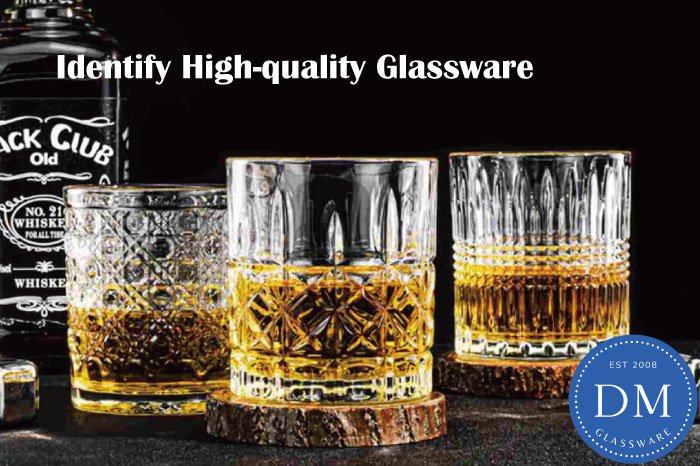

Launching a wholesale glass tumbler does not always require a new mold. If an existing factory mold already matches the intended drink, capacity range, price position and packaging format, a buyer can shorten the development path and avoid investing in tooling before demand is proven. The important distinction is that a stock mold is production tooling—not necessarily finished inventory ready to ship.
For importers, retailers, distributors and promotional programs, the right question is not simply, “Do you have a mold?” It is, “Does the current mold produce a glass that meets our commercial specification, and can the factory reproduce it reliably?” This guide explains how to answer that question without confusing stock molds with ready stock, low MOQ or an exclusive design.
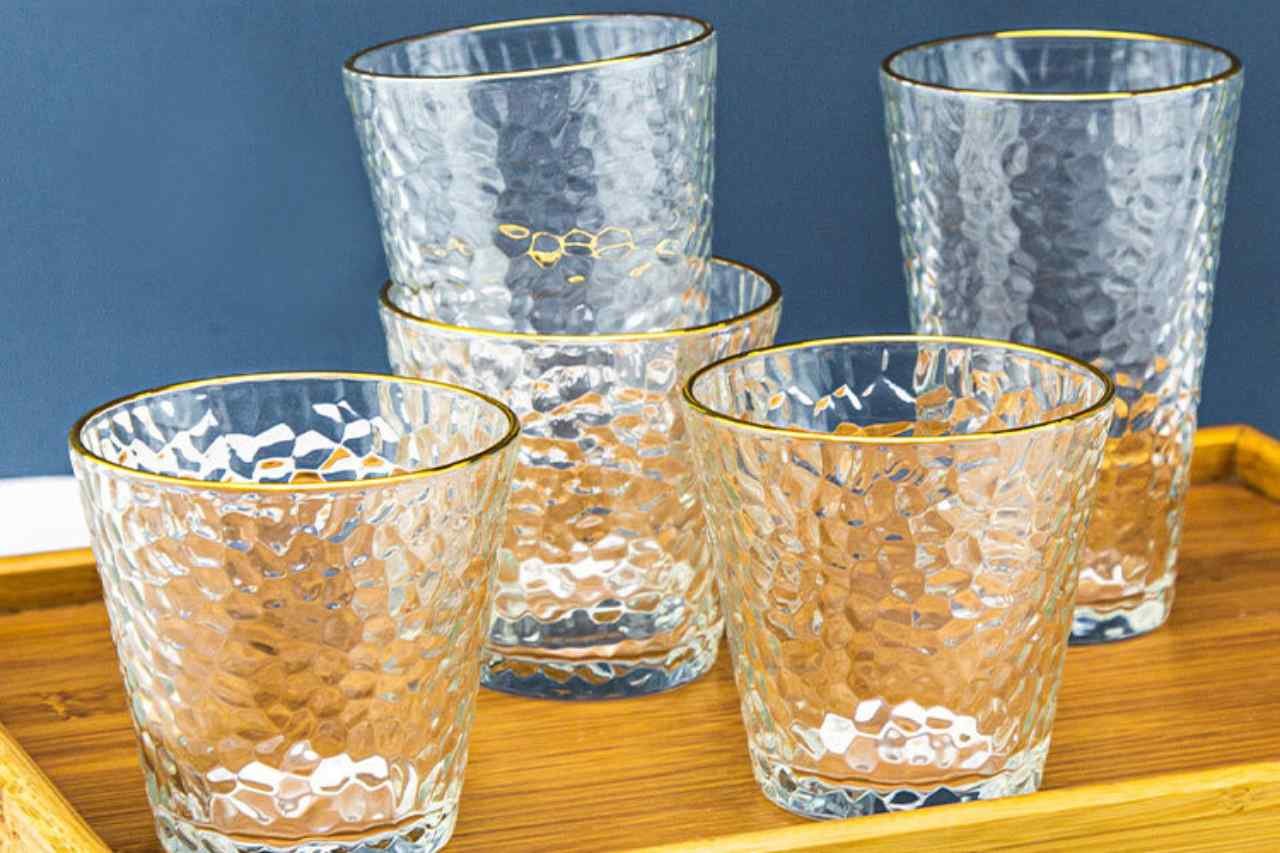
Source: DM Glassware wholesale tumbler collection
What Is a Stock Mold for Glass Tumblers?
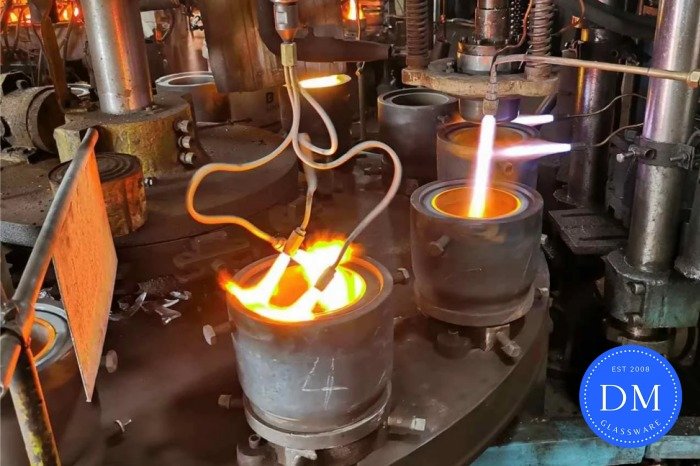
A stock mold—also called an existing, available or ready mold—is tooling that a factory has already developed for a defined glass shape. It may have been used for a standard catalogue item or an earlier program. Because the core geometry already exists, the buyer may be able to skip new-mold design, engineering review and tooling fabrication.
That does not mean the product is sitting in a warehouse. Machine-made glass production still needs a confirmed specification, an available production line, raw materials, quality criteria, decoration and packing arrangements. A mould shown in a catalogue may also need inspection, maintenance or a current trial before it is approved for a new order.
Stock Mold, Ready Stock and Custom Mold Are Different
| Route | What already exists | What the buyer still approves | Main trade-off |
|---|---|---|---|
| Stock mold | Core production tooling | Current sample, specification, decoration and packing | Faster development, but limited shape changes and no automatic exclusivity |
| Ready stock | Finished undecorated or packed goods | Availability, condition, decoration feasibility and packing | Fastest possible supply, but selection and quantities depend on inventory |
| Custom mold | Tooling made for a new geometry | Drawing, prototype, trial sample and production standard | Greater differentiation, with more development cost and time |
When a Stock Mold Is the Best Commercial Choice
Testing a new retail or distribution program
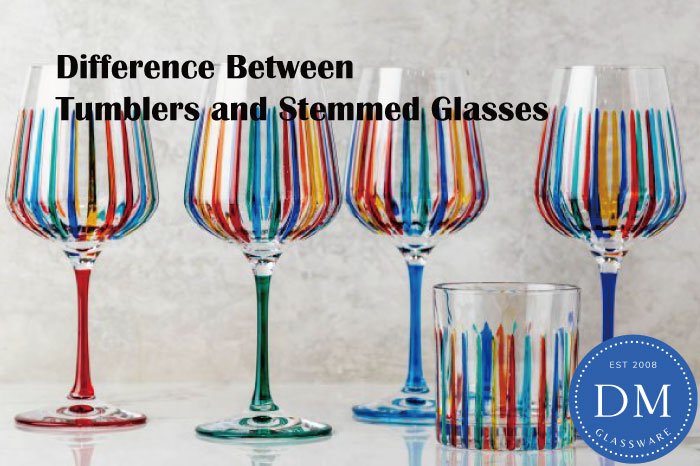
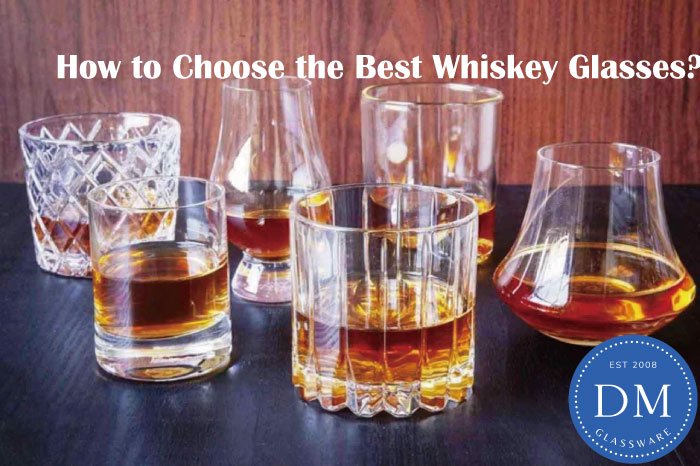
For a first launch, demand forecasts are often less reliable than design opinions. Selecting from the DM drinking glass range can let a buyer test capacity, price point and pack count before funding a proprietary shape. Commercial differentiation can come from color, logo, set composition and retail packaging rather than the glass geometry alone.
Working toward a fixed launch window
Reducing tooling exposure
A stock mold can avoid or reduce the initial investment associated with new shape tooling. It does not remove every one-time cost. Logo screens, decals, color matching, packing dies, inserts, test samples or setup charges may still apply. A useful quotation separates product, decoration, packaging and any tooling or setup costs so the buyer can see what is truly being saved.
What Can Be Customized Without Changing the Core Mold?
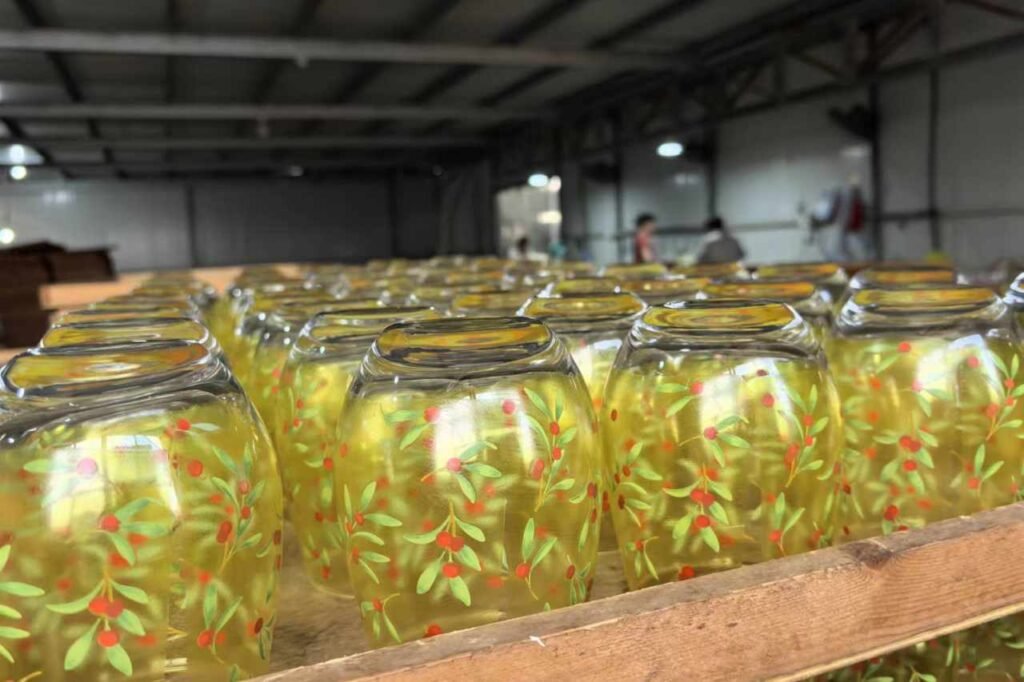
The answer depends on the glass, decoration process and production route, but stock-mold projects often allow meaningful private-label work after forming. Possible options may include logo printing, decals, frosting, color coating, selected rim decoration, gift-box artwork, inner dividers, barcodes and set quantities. Each option must be confirmed against the glass surface, intended use and required durability.
The core shape is less flexible. Changing capacity, rim diameter, base thickness, wall profile, embossed pattern or stacking geometry normally affects the production tooling. A request that looks small on a drawing can change glass distribution, forming behavior or line compatibility. Ask the engineering team whether the change is decoration, a tooling modification or a completely new mold before comparing prices.
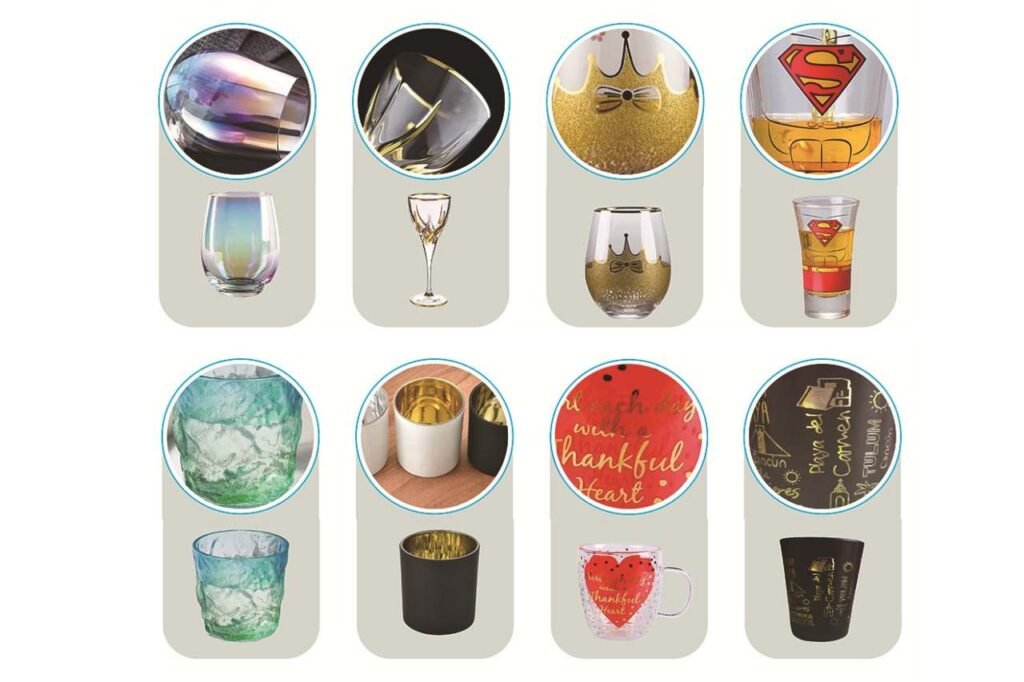
Source: custom decoration options for drinking glasses
How to Shortlist Existing Tumbler Molds
Start with the product and sales channel, not the mold catalogue. A supermarket set, restaurant replacement line, spirits promotion and e-commerce gift box have different priorities. Send the factory a short commercial brief, then request only molds that fit it.
Define the non-negotiable product specification
- Intended drink and use environment: water, juice, cocktails, spirits, foodservice or retail.
- Nominal capacity and the method used to measure it, such as brimful or usable serving capacity.
- Critical dimensions, target weight or acceptable range, rim style and base requirement.
- Pack count, retail presentation, master-carton limits and labeling requirements.
- Decoration area, artwork colors, durability expectation and any required testing protocol.
Separate mandatory requirements from preferences. If a capacity is mandatory but a wall pattern is optional, the factory can search its tooling library more effectively and offer alternatives without weakening the product purpose.
Request a mold shortlist with traceable details
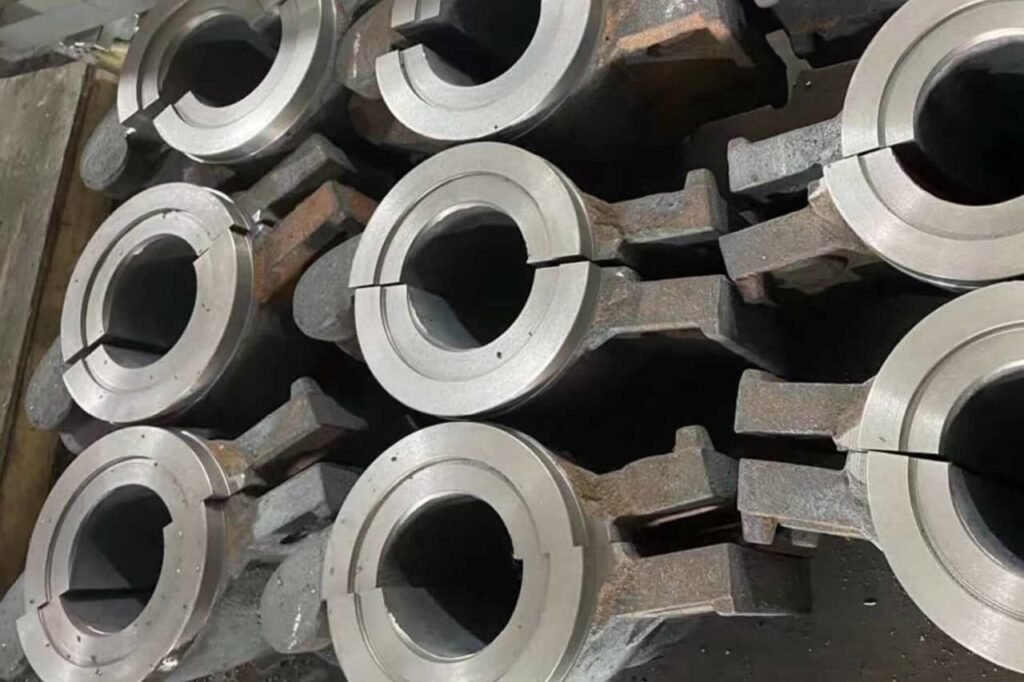
Verify the Mold Before Approving the Product
Source: glassware manufacturing process and mold overview
Existing tooling can still wear, corrode, become incomplete or produce variation between mold positions. A mould that made an acceptable glass in the past should not be approved solely from an old catalogue sample. The buyer needs evidence from the tooling that will support the new order.
Ask the factory to confirm
- Whether the complete mold set is present and which positions are intended for production.
- Whether repair, polishing or replacement parts are needed before the run.
- Whether the mold suits the proposed machine, forming method and current glass weight.
- Whether a current clear-glass trial is required before decorated sampling.
- How mold-position identification and in-process checks will be recorded.
Use a Two-Stage Sample Approval
Stage 1: approve the undecorated glass
First confirm the physical product: capacity method, dimensions, weight, rim, base, clarity, seams, stability and obvious forming defects. Record the approved specification and tolerances rather than relying on a photograph. Tolerances should be agreed for the selected item and process; they should not be copied from an unrelated glass.
Stage 2: approve decoration and packaging
After the base glass is accepted, approve artwork size and position, color reference, adhesion or durability method, packing orientation, divider fit, barcode and carton marks. A decoration that looks correct on a flat file can distort around a curved tumbler. A package that fits the drawing can still allow movement, glass-to-glass contact or abrasion in transit.
Keep an identified golden sample and signed specification for production and inspection. If the buyer approves a sample made from only one mold position, the inspection plan should still cover all positions used in mass production.
Stock Molds Do Not Automatically Mean Low MOQ
The mold route and the order quantity are related but not identical decisions. Machine-made tumblers are produced on continuous equipment, so the practical production quantity depends on line efficiency, changeover, forming stability, decoration batches and packing materials. Using an existing mold removes new-tool development; it does not remove the economics of the production line.
If the required quantity does not support a machine-made run, a hand-blown alternative may be considered when the product design allows it and the buyer accepts a higher unit cost, greater handmade variation and a different specification approach. The decision should follow product fit, quantity, budget and positioning—not a rule that one process is always better.
Commercial Risks Buyers Should Put in Writing
No automatic exclusivity
An existing factory mold may be available to other customers. If a distinctive silhouette is central to brand protection, a private mold and written ownership or usage terms may be more appropriate. Decoration and packaging can create differentiation, but they do not make the underlying stock shape exclusive.
Mold continuity for repeat orders
Ask how the mold will be identified, maintained and handled between orders. Repeat supply can still change if tooling is repaired, a mold position is replaced, the glass weight is adjusted or production moves to a different line. For long-term programs, keep controlled drawings, reference samples, decoration standards and a change-notification requirement.
Quote comparability
RFQ Checklist for a Stock-Mold Tumbler
- Target market, channel, intended use and planned launch date.
- Annual forecast, first-order quantity and expected reorder pattern.
- Capacity method, dimensions, weight range and critical appearance points.
- Acceptable stock-mold alternatives and non-negotiable requirements.
- Logo, color, decoration durability and artwork files.
- Retail pack, master carton, labeling, barcode and transit-test expectations.
- Sample sequence, golden-sample approval and inspection method.
- Mold status, position count, maintenance needs and repeat-order controls.
- Incoterm, destination, required documents and quotation validity.
Use the factory and manufacturing overview to understand DM Glassware’s production scope, then send this checklist with your inquiry. A focused RFQ lets the factory recommend existing options that actually fit the project instead of sending a long, unfiltered catalogue.
Frequently Asked Questions
Is a stock mold the same as ready-to-ship inventory?
No. A stock mold is existing production tooling. Finished goods may or may not be available. Confirm inventory separately from mold availability.
Can I add my logo to a stock-mold tumbler?
Often yes, through a compatible decoration method. The factory should confirm printable area, artwork position, color process and the relevant durability approval for the intended use.
Can the capacity or shape be changed slightly?
Some changes require tooling modification or a new mold even when they appear minor. Submit the requested dimensions for engineering review before assuming the existing mold can be adjusted.
Will a stock mold reduce the MOQ?
It can reduce tooling exposure, but it does not automatically reduce the practical minimum for machine production, decoration or packaging. The supplier must evaluate the complete specification and production route.
When should I choose a custom mold instead?
Choose custom development when a proprietary shape, embossed feature, exact geometry or exclusivity is commercially important enough to justify added development time, tooling cost and validation.
Launch Faster Without Skipping Product Validation
A suitable stock mold can be an efficient route to a wholesale tumbler launch, especially when speed and controlled development risk matter more than exclusive geometry. The advantage only becomes real after the buyer verifies the current mold, approves representative samples, defines decoration and packaging, and documents repeat-order controls.
To review existing tumbler options against your capacity, quantity, budget and launch plan, contact the DM Glassware team. Share the RFQ checklist above, and the team can evaluate whether an existing machine-made mold, a modified solution, a new mold or a hand-blown route best fits the project.