
A wholesale whiskey glass set is not simply several heavy tumblers placed in a box. Retail buyers must decide how the glass should feel, how molded decoration should repeat across pieces, how every unit fits the retail pack and how the complete set will move through distribution. If these decisions are delayed until sampling, the set can miss its price target or look premium while performing poorly.
This guide is for retailers, importers, spirits brands and gift suppliers sourcing machine-made whiskey glass sets. It focuses on measurable product and packaging specifications rather than general whiskey-glass types or logo techniques. Machine-made production usually fits programs that need repeatable shapes and scalable volume; another route should be evaluated only when quantity, budget or design conditions require it.
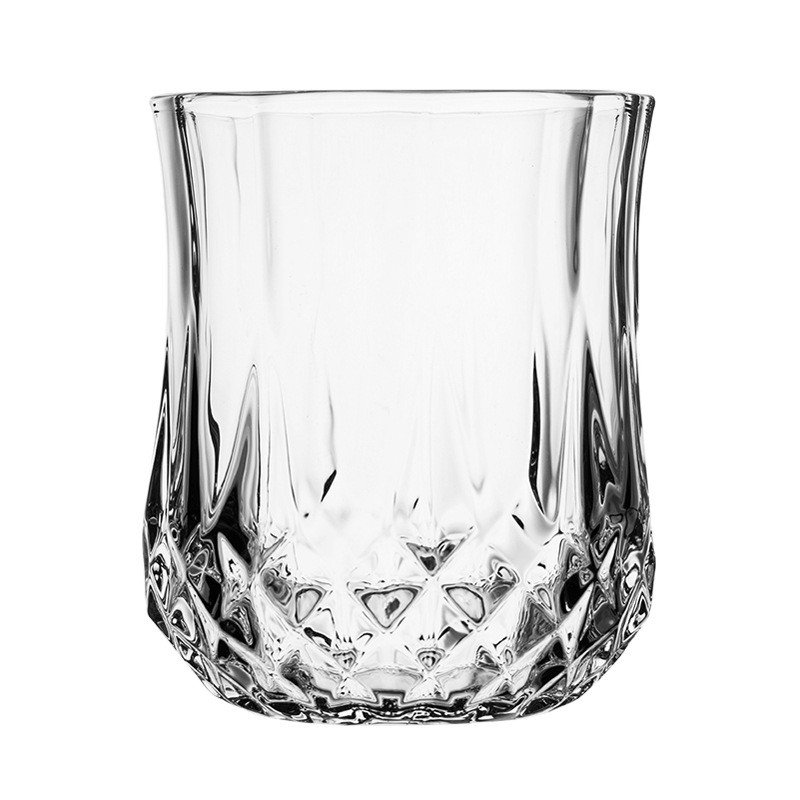
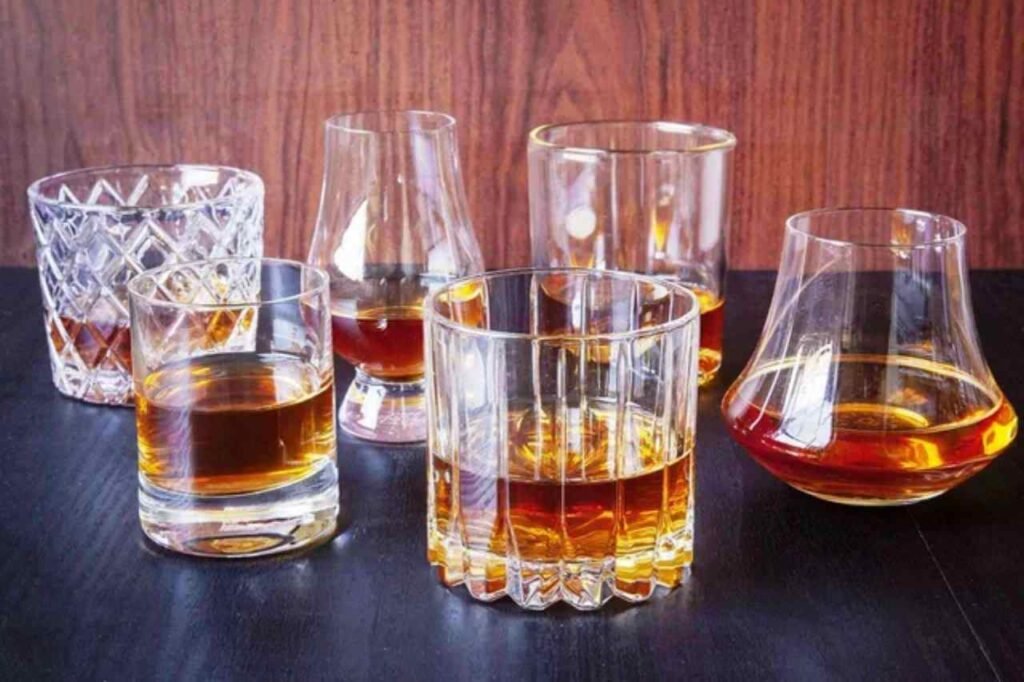
Source: DM Glassware diamond-cut whiskey glass set
Start With the Retail Offer
Before selecting a mold, define what the customer is buying: an everyday two-piece rocks set, a four- or six-piece family pack, a premium spirits gift or a seasonal promotion. That decision controls acceptable glass weight, pattern complexity, decoration, box structure and shelf price.
A useful brief states the channel, intended drink, target price tier, pack count, forecast, launch date and reorder plan. Review the wholesale whiskey glass collection after those points are clear. Otherwise, buyers may select the heaviest-looking glass first and later discover that the complete set exceeds its packaging or landed-cost target.
Turn “Premium Weight” Into a Specification
Weight is a design and cost variable, not a universal quality grade. A heavier base can improve stability and hand feel, but excessive glass can increase forming difficulty, carton weight, freight cost and shelf-handling risk. A lighter tumbler may be better for a value program if its proportions and rim are suitable.
Specify the complete relationship
- Target piece weight and an agreed production range.
- Nominal capacity and whether it is measured brimful or at a defined serving level.
- Height, top diameter, base diameter and critical wall or base dimensions.
- Complete set weight, including glasses, insert, box and accessories.
- Balance: a solid base without an uncomfortable bottom-heavy feel.
Approve weight together with capacity and dimensions. Two glasses can hold the same nominal volume but distribute material differently between the wall and base. Review several pieces from the intended mold positions rather than one ideal sample, and record the measurement method.
Control the Molded Pattern
Facets, diamonds, ribs and geometric cuts are created by the mold. Pattern depth and definition affect appearance, grip, material distribution and release from the tooling. Catalogue photographs can hide soft details, seams or mold-position differences, so the pattern must be treated as a controlled feature.
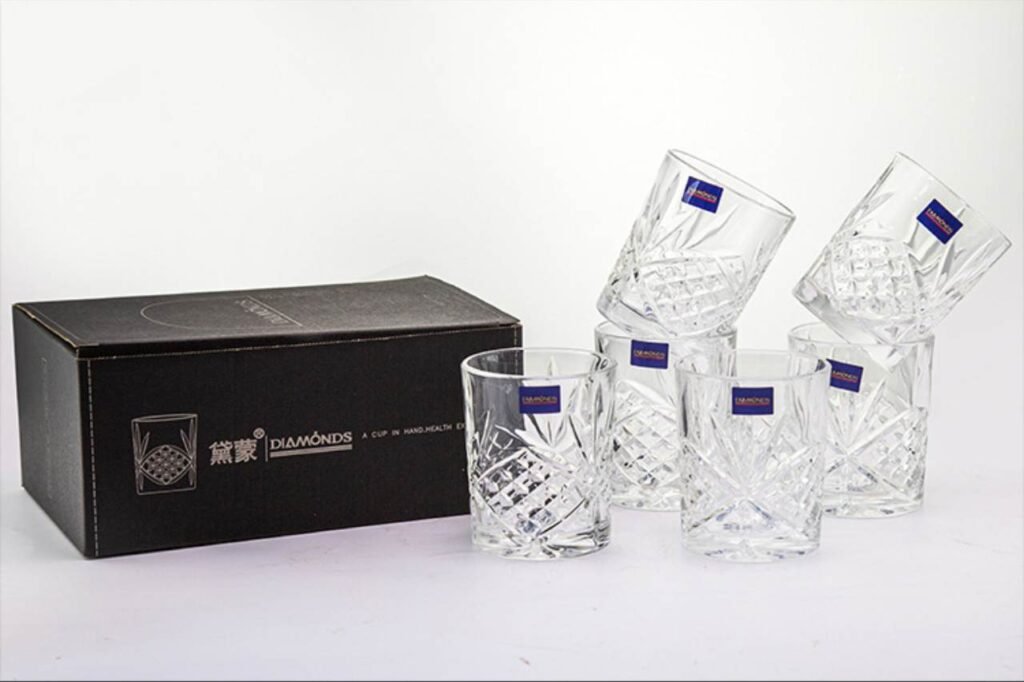
Source: DM Glassware patterned whiskey glass example
Inspect these details
- Pattern alignment around the glass and where the design meets the mold seam.
- Edge definition that is clear but not uncomfortable on the exterior.
- Symmetry between opposite facets and consistency among pieces in one set.
- Incomplete detail, drag marks, heavy seams or local distortion.
- A stable base and level rim on a flat surface.
Not every visible line is automatically a defect. Machine-made glasses can show process-related seams or minor variation within an approved standard. Buyer and factory should agree which features are critical, which are major appearance defects and which variations are acceptable for the selected mold and price tier.
Confirm decoration compatibility
A deeply patterned sidewall may not provide a flat area for printing or decals. A bottom laser mark, clear panel, packaging branding or another compatible process may be more practical. Confirm the decoration location before artwork approval and test it on the actual glass, not a smooth substitute.
Choose the Set Before Designing the Box
Pack count changes both the offer and the packaging. Two-piece sets suit compact gifts and e-commerce. Four- and six-piece sets can create stronger shelf value but add weight and require more glass-to-glass separation. Mixed sets with stones, coasters or another glass style need separate fit and document review.
| Decision | Value retail set | Premium gift set |
|---|---|---|
| Glass | Efficient weight, existing mold, repeatable pattern | More substantial hand feel or stronger visual detail |
| Pack | Compact color box and efficient master carton | Presentation box and stronger insert |
| Branding | Printed box or simple glass logo | Coordinated glass, insert and box finish |
| Main risk | Cost increases without visible value | Presentation improves while transit protection is missed |
Make Retail Packaging Perform Four Jobs
Present the product
The front, window or opening sequence should clearly show the molded pattern and set count. Artwork must use the approved product image and correct capacity and material description. Identify barcode, lot or date-code areas before print approval.
Separate the glasses
The insert should prevent direct contact between rims, walls and bases. Check divider height, cell width, top and bottom clearance and whether a glass can rotate into a weak position. Coatings or metallic rims may also require protection against rubbing.
Support distribution
The retail box must work inside the master carton. Specify carton count, orientation, gross weight, dimensions, loading plan and any agreed transit test. Validate the package for its real route—palletized retail distribution, parcel delivery or mixed handling—rather than assuming one box suits every channel.
Remain packable
A complex insert may look attractive in a drawing but slow packing or allow assembly errors. Approve a physical pack sample made with representative glasses. Confirm that operators can orient the pieces, close the box without rim pressure and apply labels without covering required information.
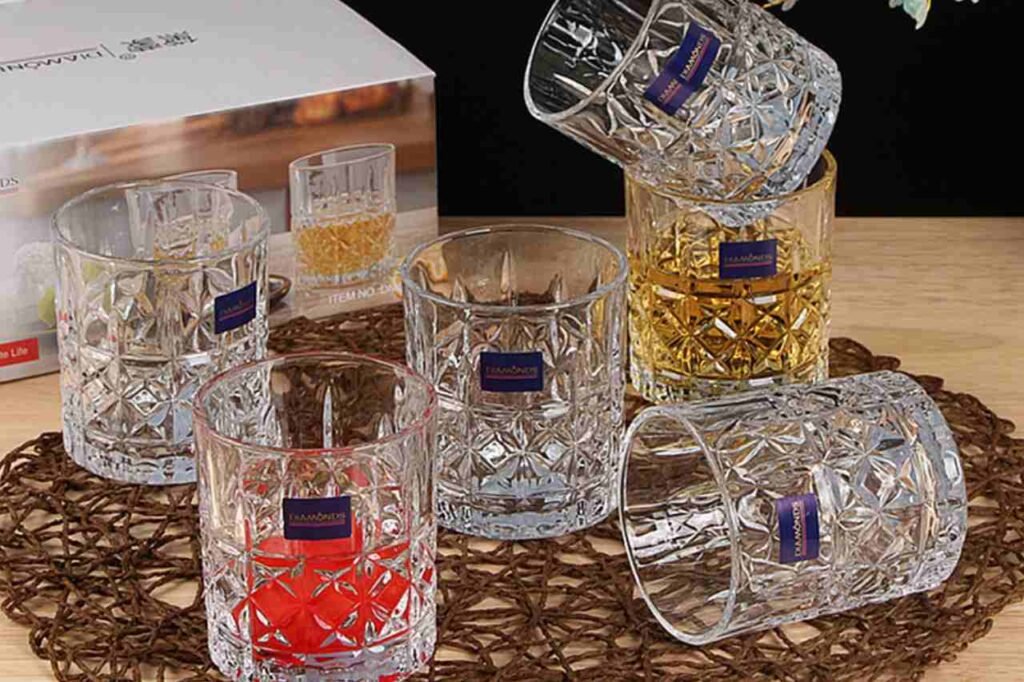
Source: retail box example for a DM whiskey glass set
Compare Complete Cost, Not Only Glass Price
Quote the set as one configuration. Separate the blank glass, decoration, insert, retail box, master carton, tooling or setup charges and optional testing. Then compare container quantity, carton gross weight and estimated landed cost. A low glass price can be cancelled by an inefficient box; a lighter box can fail if it allows movement.
Approve Samples in Three Steps
1. Clear glass
Confirm capacity method, dimensions, weight, molded pattern, seam, rim, base stability and acceptable appearance limits. If several mold positions will run, the sample review should represent them.
2. Decoration
Check artwork size, location, color reference, registration and the agreed durability method. A pattern changes how a logo appears from different angles, so review the decorated glass both inside and outside the box.
3. Complete packed set
Use actual glasses, insert, retail box, labels and master carton. Confirm pack count, orientation, barcode, marks, closure and internal movement. Keep an identified golden sample and signed specification for production and inspection.
Mass-Production Inspection Checklist
- Piece weight, capacity and critical dimensions measured by the agreed method.
- Pattern definition, alignment, seams and consistency within each set.
- Rim finish, base stability, forming defects and decoration condition.
- Correct set count, matched appearance and correct accessory or leaflet.
- Insert fit, box condition, barcode readability, labels and carton marks.
- Master-carton construction and agreed transit or packing verification.
Define sampling level, defect categories and responsibility before production. Do not invent a universal whiskey-glass tolerance; limits should follow the approved product, mold, process, market and contract.
Protect Repeat Orders
Control the glass, artwork and box as one SKU. Record the mold and item code, approved weight and dimensions, pattern reference, artwork revision, color reference, pack configuration and golden sample. Require notice before a mold position, glass weight, decoration process, insert material or packaging supplier changes.
Choose the Production Route by Project Conditions
Machine-made production normally suits retail whiskey sets requiring consistent geometry, molded patterns and repeat supply at scale. A hand-blown route may fit a lower-volume, less price-sensitive premium project if the design accepts handmade variation and a different cost structure. Select the route after defining product, quantity, budget and positioning.
RFQ Checklist
- Channel, target customer, price tier, launch date and forecast.
- Item or mold code, capacity method, dimensions and weight requirement.
- Pattern reference, appearance limits and decoration area.
- Set count, accessories, retail-box structure, insert and artwork.
- Master-carton quantity, gross-weight limit, destination and shipping method.
- Sample sequence, golden sample, inspection plan and required documents.
- Reorder forecast, mold continuity and change-notification requirement.
Frequently Asked Questions
Is a heavier whiskey glass always better?
No. Weight should support hand feel, stability, price tier, packaging and freight targets. Extra weight without consumer value can reduce margin.
Can molded patterns vary?
Minor process variation may occur, but buyers should define acceptable appearance and inspect multiple pieces and mold positions. Distortion, incomplete detail or misalignment should be classified.
Can a logo be printed over the pattern?
Sometimes, but texture can reduce printable area or alter appearance. Test the process and location on the actual glass.
Can a dieline approve the retail box?
No. Approve artwork and structure, then the complete packed set. Fit, movement and protection cannot be confirmed from a dieline alone.
What should be retained for reorders?
Keep controlled specifications, mold and item codes, artwork revisions, packaging details and a golden sample. Require notice before material, tooling or process changes.
Build the Set as One Retail Product
A reliable wholesale whiskey glass program treats weight, molded design, decoration, pack count and retail packaging as one specification. This makes quotations easier to compare, reduces late packaging changes and gives inspectors a clear standard.
Review the DM Glassware product range for possible components, then contact the DM Glassware team with the RFQ checklist. The team can evaluate existing machine-made glasses, decoration and packaging against your quantity, budget and retail position.