Cocktail glass packaging has to protect the same product through very different handling environments. A master carton that performs well on a pallet may still be unsuitable for single-parcel courier delivery. A beautiful retail box may present the brand well but provide too little restraint when shipped without an outer mailer. For B2B buyers, the right specification therefore starts with the actual distribution route—not with a generic request for ‘safe export packing.’
This guide explains how importers, private-label brands and e-commerce sellers can build a packaging brief for cocktail glasses. It focuses on the decisions that affect protection, presentation, fulfillment efficiency and replacement cost. It does not prescribe one universal carton or test level: those choices should be confirmed against the glass design, pack quantity, destination, carrier requirements and your agreed acceptance criteria.
Map the Entire Distribution Journey Before Designing the Pack
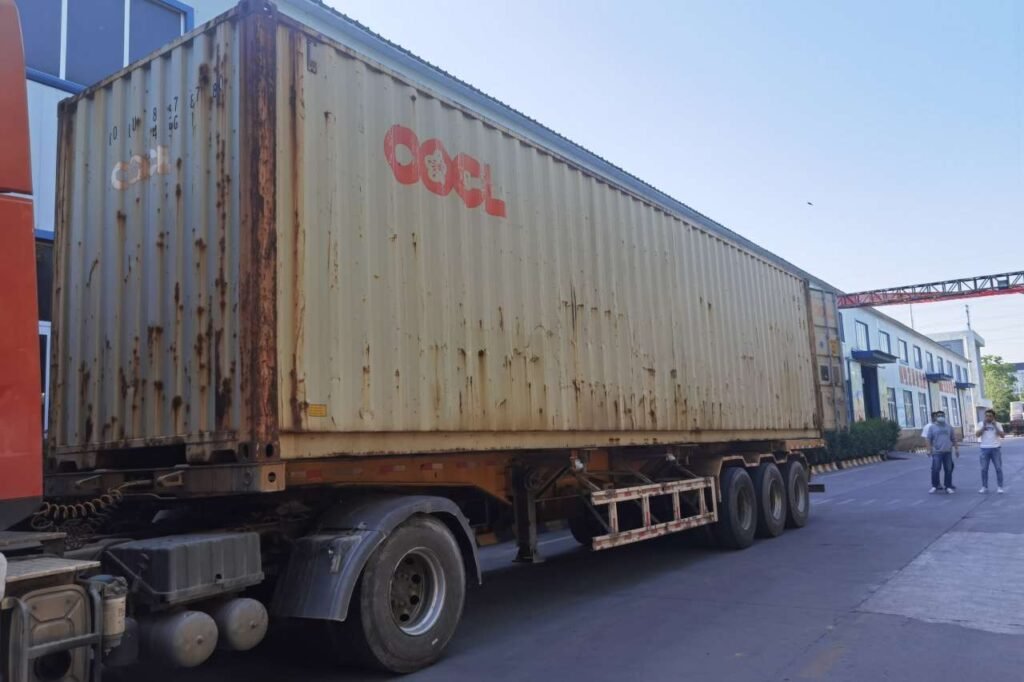
Start by documenting every transfer from the factory to the end customer. A typical route may include factory packing, palletization, container or air freight, importer warehousing, order picking, parcel sorting, last-mile delivery and customer returns. Each stage creates a different risk. International freight emphasizes stacking, compression, moisture exposure and repeated handling. E-commerce fulfillment adds drops, impacts from multiple directions and the possibility that a box travels with little support from neighboring cartons.
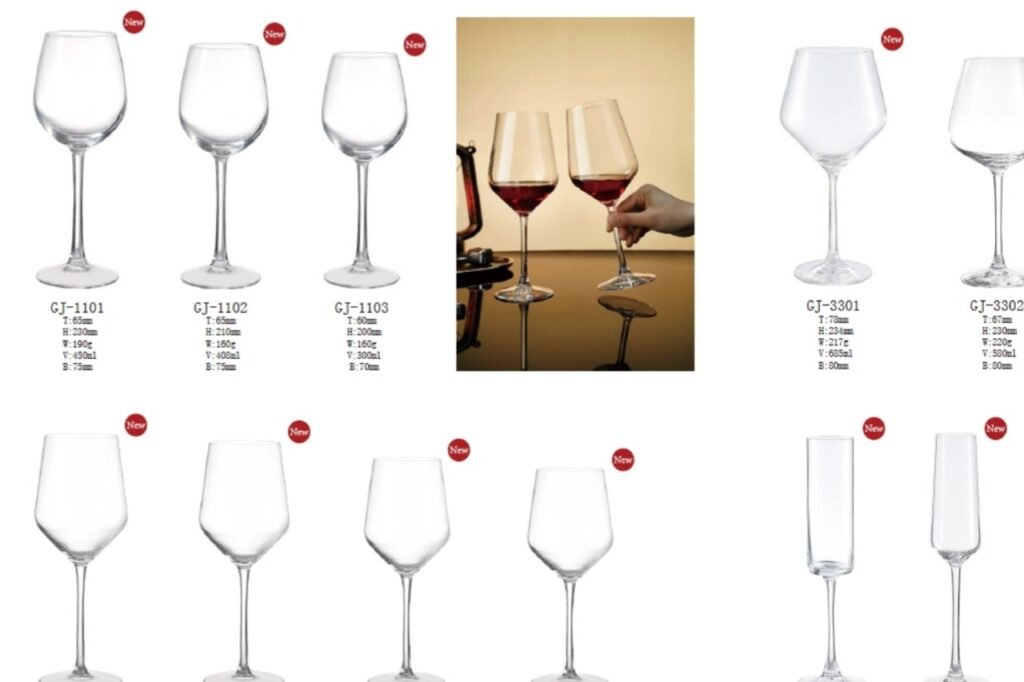
Ask one operational question first: will the retail unit remain inside a master carton until it reaches a store, or will that same unit be sent individually to a consumer? The answer changes the required packaging architecture. When reviewing shapes in the DM Glassware cocktail glass collection, note which SKUs have wide bowls, narrow stems, heavy bases or projecting rims; the outer dimensions alone do not describe how the glass should be restrained.
Choose a Packaging Architecture for the Sales Channel
The package should match the way the SKU is sold and handled. Use the following comparison as a starting point for discussion with your supplier and fulfillment partner.
Bulk import for wholesale or hospitality
Products normally remain grouped in inner packs and master cartons until they reach a distributor, hotel or restaurant. Priorities are efficient case packs, stable dividers, predictable carton dimensions and pallet utilization. Decorative retail packaging may be unnecessary unless the buyer needs shelf-ready units.
Retail box inside a master carton
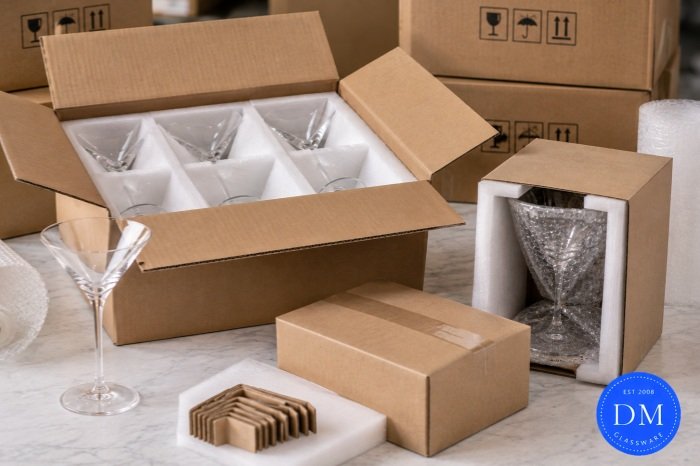
The color box carries branding and consumer information, while the master carton provides transport protection. The retail insert should keep glasses separated and present them consistently when opened. The master carton must control movement among retail units and tolerate the planned stacking and logistics route.
E-commerce-ready parcel pack
A unit intended for direct parcel shipping needs protection from impacts on multiple faces and edges. It may require a dedicated mailer, more complete cushioning, stronger closure and space for labels that does not obstruct required product information. Do not assume a retail box is automatically a ship-in-own-container pack.
Gift set or premium direct-to-consumer pack
Presentation, unboxing sequence and surface finish become more important, but protection cannot be delegated to appearance. A rigid-looking box can still allow the bowl, stem or rim to move. If a gift box is placed inside a courier mailer, define both layers as one tested system.
Design the Insert Around the Glass Geometry
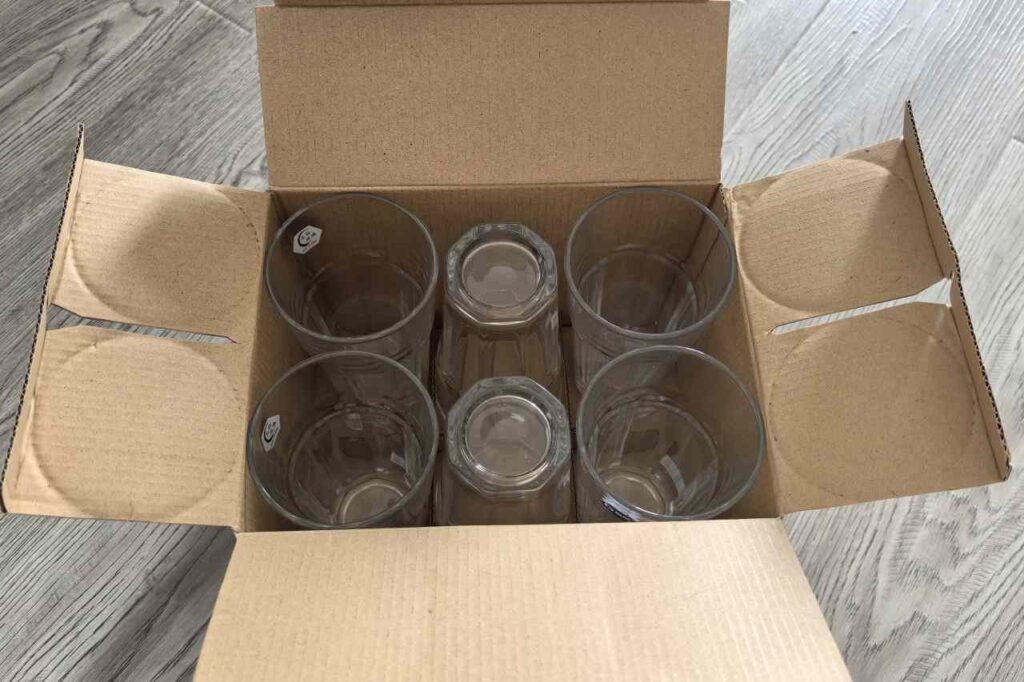
Cocktail glasses are not protected simply by adding more material. The insert must manage where forces travel. For a stemmed coupe or martini glass, the bowl, stem and foot respond differently to impact. For a rocks glass, the heavy base can create momentum inside the box. For an irregular tiki or embossed glass, protruding details may concentrate contact pressure.
A practical insert review should confirm the following:
- No direct glass-to-glass contact during normal handling.
- The product cannot gain enough movement to strike the outer carton or another glass.
- The rim, bowl, stem and foot are supported without forcing one fragile area to carry the entire load.
- Top and bottom clearances remain controlled after the box is closed and stacked.
- The insert can be assembled correctly and consistently at production speed.
- The customer can remove the glass without pulling against a thin stem or sharp fold.
Machine-made and hand-blown production are relevant only where they affect the approved fit. Machine-made products usually support a more repeatable insert cavity, while hand-blown items may need an allowance based on the agreed sample and dimensional tolerances. The manufacturing method should not be used as a marketing shortcut for packaging quality; the actual geometry and approved variation should drive the fit.
Select Insert Materials by Performance and Fulfillment Needs
Common options include corrugated partitions, folded paperboard, molded pulp and foams. Each can work when designed for the product and channel. Corrugated structures are efficient for case packs and can be easy to source. Molded pulp can create shaped support and a paper-based presentation. Foam can provide precise cushioning but may affect sustainability targets, disposal instructions and cost. Paperboard inserts can combine graphics with product positioning, yet thin decorative structures may need an additional transport layer.
Evaluate materials on more than unit price. Consider tooling, storage volume, packing labor, assembly error, recyclability claims permitted in the destination market, moisture sensitivity and the number of components the warehouse must manage. Ask the supplier to quote the complete pack configuration rather than comparing only the insert price.
Treat the Retail Box, Mailer and Master Carton as One System
Packaging layers interact. A tight retail box may still move inside an oversized master carton. A strong master carton can lose stacking performance if inner units leave large voids. An e-commerce mailer may protect the first shipment but become unsuitable after a customer opens and returns it.
Specify the number of glasses per retail unit, retail units per master carton, orientation, divider layout, closure method, label area, carton dimensions and gross weight. Confirm whether mixed SKUs will share one master carton and whether fulfillment teams will re-pack units. If palletized, review the layer pattern, overhang, stretch wrapping, corner protection and how the pallet will be loaded. DM’s downloadable glassware catalogs can help buyers shortlist product dimensions before requesting a packaging proposal.
Test the Exact Pack You Plan to Ship
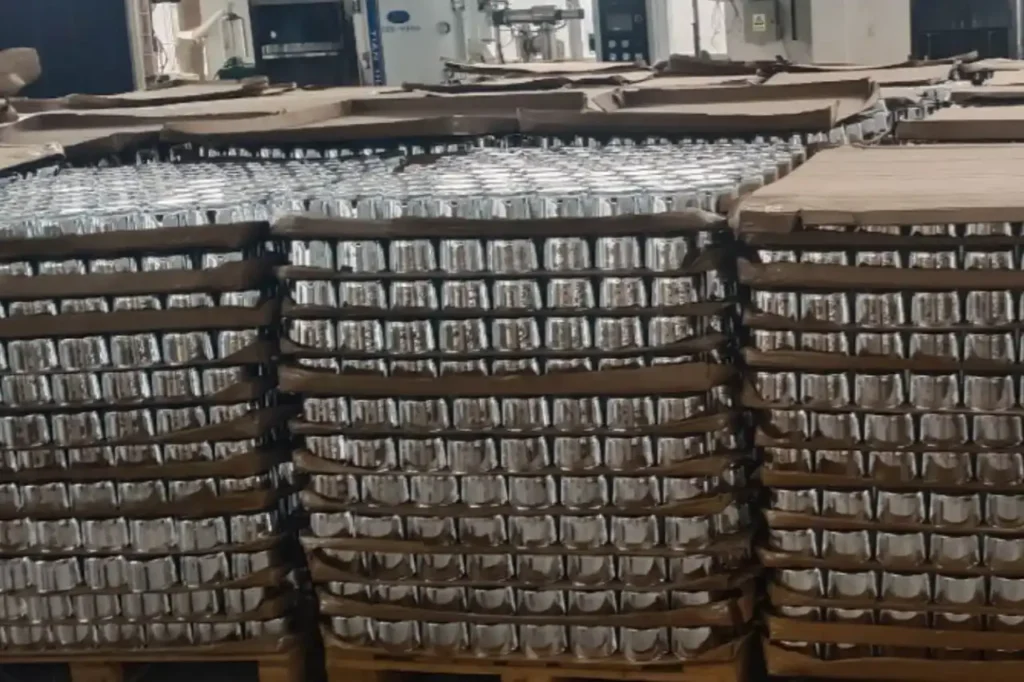
A test is meaningful only when the sample matches production intent. Use the correct glass, decoration, insert, retail box, mailer, master carton, tape pattern and pack count. Record the sample revision so later changes do not invalidate the result. If the buyer, marketplace, carrier or laboratory specifies a method, conditioning environment, drop sequence, vibration profile or compression requirement, put those details in the purchase specification.
Do not convert a test name into an absolute quality promise. Results apply to the tested configuration and conditions. After testing, inspect not only for catastrophic breakage but also chips, cracks, abrasion, decoration damage, loose components, deformed boxes and changes that could affect presentation. When practical, repeat evaluation after packaging artwork, material or supplier changes.
Calculate the Cost of Damage, Not Only the Cost of the Box
For e-commerce brands, the cheapest pack per unit may not produce the lowest delivered cost. A damaged order can create replacement glassware, new packaging, pick-and-pack labor, additional freight, customer-service time, refunds and negative reviews. Build a simple landed-loss model using your own route data: damage incidence multiplied by the average cost of resolution, then add the packaging and fulfillment cost.
Track failures by SKU, packaging revision, warehouse, carrier lane and destination. Photos of the outer carton, inner pack and damaged glass help identify whether the issue is movement, edge impact, compression, abrasion or handling outside the assumed route. This evidence is more useful to a factory than a general complaint that the packaging was ‘not strong enough.’
Packaging Approval Checklist for Buyers
- Confirm the exact glass SKU, approved sample and dimensional tolerances.
- Define the sales channel: wholesale, retail, marketplace fulfillment or direct parcel shipping.
- Map every packaging level from individual glass to pallet or loose-loaded container.
- Approve insert fit, pack orientation, count, closure and labeling location.
- Provide destination, carrier or marketplace testing requirements before final quotation.
- Approve artwork, barcode placement, legal copy and country-specific recycling marks separately from structural performance.
- Retain a reference sample and packaging revision record.
- Agree how production packaging changes will be communicated and re-approved.
Frequently Asked Questions
Can a printed retail box be used as the courier shipping box?
Sometimes, but only if the complete unit is designed and validated for that parcel route. Many retail boxes prioritize display and require an outer mailer or additional cushioning. Confirm carrier labeling, closure, surface durability and return requirements before deciding.
How much clearance should there be around a cocktail glass?
There is no universal clearance. It depends on the glass geometry, insert material, pack orientation, manufacturing variation and test requirement. The supplier should review the approved sample and prototype the complete pack rather than applying one number to every SKU.
Is molded pulp always better than foam or corrugated inserts?
No. Each material has different cushioning, tooling, assembly, cost and end-of-life characteristics. Select the structure through prototypes and channel-relevant testing, and verify any environmental claims for the destination market.
Do fragile labels prevent cocktail glass breakage?
A label may communicate handling intent, but it cannot replace internal restraint, adequate carton construction and an appropriate tested configuration. Design the package for the expected distribution environment rather than relying on the label.
What should I send a factory for a packaging quotation?
Provide the glass SKU or drawing, approved dimensions, quantity, decoration, unit pack count, sales channel, destination, fulfillment method, branding files, required labels and any buyer, marketplace or carrier test protocol. State whether the quote should include retail packaging, parcel mailer, master carton and palletization.
Build a Packaging Brief for Your Cocktail Glass Program
Good cocktail glass packaging is a documented system linking product geometry, sales channel and logistics risk. Begin with the SKU and real distribution route, prototype the complete pack, test the intended configuration and track field results after launch. This approach gives buyers a defensible basis for balancing protection, presentation, sustainability and cost.
If you are sourcing a new cocktail glass line, contact the DM Glassware team with your product selection, unit pack, destination and fulfillment route. The team can review glass and packaging requirements together and prepare options for your quotation and sample-approval process.