
The short answer
A supermarket wine-glass program should be built backward from the shopper, shelf price, pack format and replenishment plan—not from a factory catalogue alone. Define who will buy the set, what retail price the category can support, how many glasses belong in each box, and how stores will reorder the same specification. Only then should you choose a model, decoration and production method.
For most recurring supermarket programs, machine-made stemware is the practical starting point because it supports repeatable dimensions, packing efficiency and large production runs. Hand-blown glassware can still be the right choice for a smaller premium launch, especially when volume does not justify a machine-production campaign and the buyer can accept a higher unit cost. The decision should follow the commercial brief, not become the brief.
1. Start with the retail proposition, not the glass shape
Before requesting quotations, write a one-sentence proposition for each SKU. For example: “an accessible four-piece everyday wine-glass set for family use” or “a premium two-piece gift set for seasonal displays.” This forces the buying team to separate the role of each item and prevents several nearly identical shapes from competing on the same shelf.
A useful opening assortment often has a clear good-better-best logic. The value tier emphasizes a familiar silhouette, efficient packing and a dependable target cost. The core tier may improve the rim, proportions or presentation. A premium tier can justify a more distinctive bowl, lighter visual appearance, special decoration or gift packaging. The exact number of tiers should follow the retailer’s category plan; adding SKUs without a distinct shopper reason usually creates slower inventory and more complicated reorders.
Use the wholesale wine glass collection to shortlist existing shapes by capacity, height and style, but evaluate them against the retail proposition rather than selecting only by appearance.
2. Choose pack size as a commercial decision
Two-, four- and six-piece sets serve different jobs. A two-piece set can support gifting, premium positioning or a lower total ticket for a more expensive glass. Four pieces are easy for many households to understand and can balance shelf price with useful quantity. Six-piece sets provide a stronger “complete set” message, but the larger box increases packaging material, shelf footprint, carton volume and exposure if one glass is damaged.
Pack format | Best used when | Questions to confirm |
|---|---|---|
2-piece | Premium, giftable or trial-oriented range | Can the margin support higher packaging cost per glass? |
4-piece | Core household assortment | Does the box fit the shelf and target ticket? |
6-piece | Value-led or complete-table setting | Is the larger cube efficient for cartons and freight? |
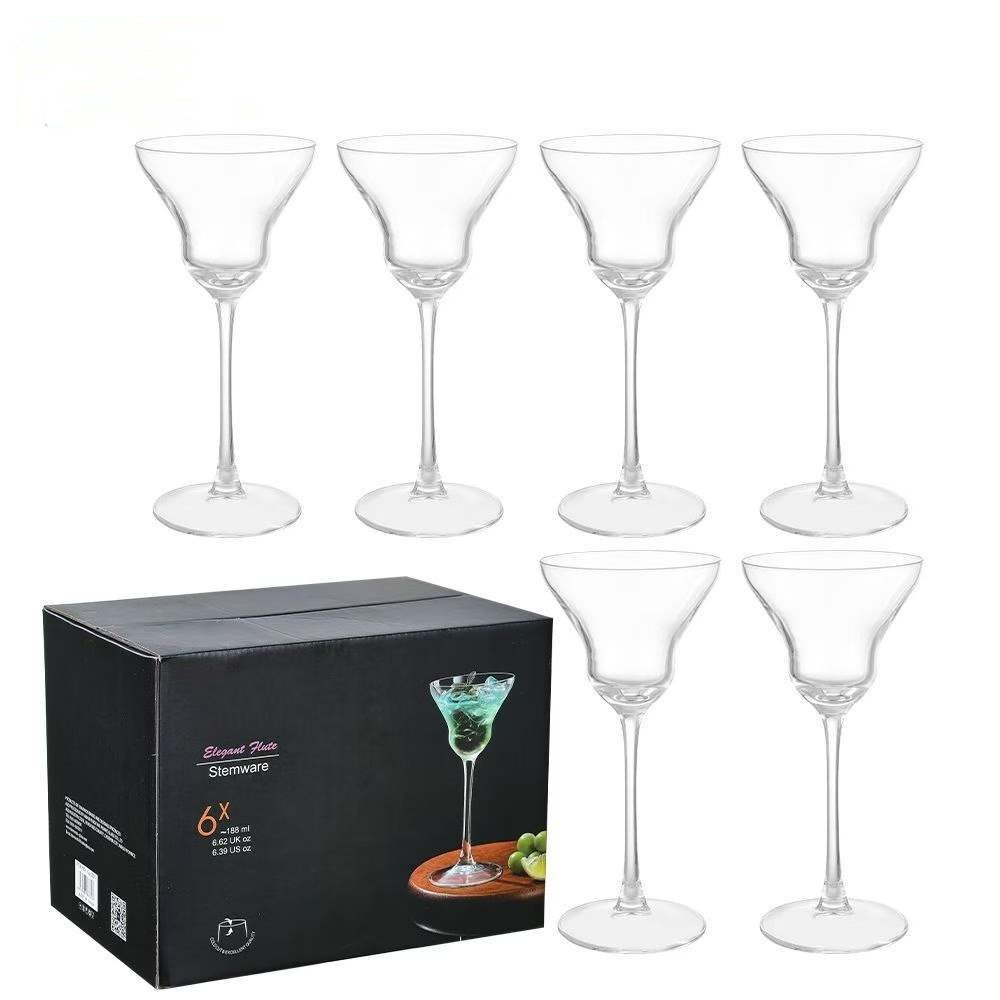
Do not choose the pack count in isolation. Ask the supplier to quote the same candidate glass in the realistic pack options you are considering, with proposed inner protection and master-carton quantities. Compare cost per retail set, cost per glass, carton cube, pieces per carton and estimated container utilization. A cheaper glass can produce a more expensive landed set if the box uses space poorly.
3. Work backward from the shelf price
A useful target cost is not simply the lowest ex-factory quote. Start with the intended retail price and deduct the retailer’s required margin, import duty where applicable, inland delivery, ocean or air freight, inspection, warehousing, promotional allowances and a realistic damage provision. The amount left is the target landed product-and-packaging cost. Your finance or importing team should supply the actual percentages and freight assumptions for the destination market.
Send the factory a target range rather than asking for “your best price.” A clear target allows the supplier to recommend an existing mold, adjust glass weight, simplify decoration or redesign the box without quietly changing the product’s purpose. If the quote misses the target, request an option ladder: current specification, cost-reduced specification and upgraded specification. Every alternative should identify exactly what changed.
Cost variables buyers should separate
- Glass body: material, weight, dimensions, rim treatment and selected mold.
- Decoration: logo method, number of colors, coverage area and any special finish.
- Retail pack: box structure, print specification, inserts, labels and barcode application.
- Export pack: master carton, dividers, protective materials, palletization if required and loading efficiency.
- One-time costs: new mold, artwork preparation, samples or testing agreed for the project.
4. Decide when machine-made or hand-blown production fits
Process should be selected after the product and commercial conditions are known. Machine-made wine glasses generally suit high-volume, repeat-order programs where dimensional consistency, output and unit economics matter. Existing molds can shorten development and reduce tooling exposure. A new custom machine mold may be worthwhile only when projected volume and product life can absorb its cost and production requirements.

Hand-blown production may suit a premium capsule range, a differentiated design or an initial quantity below the practical threshold for a machine-made project. Tooling can be simpler and the starting quantity more flexible, but unit cost is higher and buyers must approve realistic handmade variation. It should not be presented as a lower-cost substitute for mass retail stemware.
When evaluating capacity and process options, review DM Glassware’s manufacturing profile, then ask the project team which available line and mold are suitable for your forecast, design and repeat-order plan.
5. Treat retail packaging as part of the product
For supermarkets, the consumer sees the box before using the glass. Packaging must communicate the set clearly, survive the agreed distribution route and work with store handling. Provide final dielines and market-ready artwork rather than leaving assumptions to the supplier.
Retail-pack checklist
- Front and side panels show the correct glass count, capacity, material wording and use imagery.
- Barcode type, number, quiet zone, position and print contrast are approved by the retailer.
- Box dimensions and gross weight are confirmed against shelf, case-pack and handling limits.
- Internal dividers or molded protection prevent glass-to-glass contact during the agreed route.
- Country-of-origin, care, recycling and importer information follow the destination market and retailer brief.
- Master-carton marks, retail-set orientation and carton quantity match warehouse requirements.
Do not accept “export-safe” as a complete packaging specification. Agree how packaging will be validated for the actual product and route. That may include sample pack-out review, handling simulation or a test method required by the retailer. Record the agreed method and acceptance criteria in the purchase specification instead of assuming one test fits every program.
6. Approve a specification that can be reordered
A beautiful pre-production sample is not enough. The approved record should connect the physical sample to a written specification: model or mold reference, capacity, key dimensions, nominal weight, rim and foot details, decoration artwork, color standard, retail-pack version, master-carton layout and agreed tolerances. For handmade products, define which natural variations are acceptable and which defects are not.
Keep one signed golden sample with the buyer and one with the factory when practical. Add dated photos and measurements to the approval file. For every repeat order, reference the same specification revision and identify any requested change before production. This reduces accidental substitutions when staff, materials, packaging vendors or production schedules change.
7. Build replenishment into the first order
Supermarket buyers should discuss reorders before launch. Share a forecast by SKU, expected first-order allocation, desired reorder rhythm and promotional peaks. Ask what lead-time components apply to the selected design: material planning, production campaign, decoration, packaging procurement, inspection and transport. Do not rely on one undifferentiated lead-time promise.
Confirm how the factory will identify the product in future orders and whether the selected mold is shared, exclusive or customer-owned. Keep packaging artwork version control under the buyer’s control. If several capacities form one family, document the proportions and pack architecture for every SKU so later additions do not drift away from the original line.
8. Send an RFQ that produces comparable quotations
A quotation is only useful when suppliers are pricing the same brief. Include the following information in the first RFQ:
- Destination market, sales channel and intended retail launch window.
- Reference images or shortlisted model numbers, capacity and key dimensions.
- Pack count, target shelf-price tier and target landed or ex-factory range.
- First-order quantity by SKU plus twelve-month forecast and reorder expectation.
- Logo, decoration, retail artwork, barcode and labeling requirements.
- Requested sample stages, inspection plan and packaging-validation requirement.
- Trade term, destination port or delivery point, and whether palletization is required.
You can download DM Glassware catalogues to identify candidate models before preparing the RFQ. Include alternatives you are willing to consider so the factory can compare existing molds with a custom route.
FAQ
What is the best pack size for supermarket wine glasses?
There is no universal best size. Two pieces often support premium or gifting logic, four pieces suit many core household ranges, and six pieces can communicate value. Compare shelf footprint, target ticket, packaging cost, case cube and expected shopper use before deciding.
Should supermarket wine-glass sets always be machine-made?
No. Machine-made is usually the stronger fit for recurring volume and tight cost targets. Hand-blown can work for a smaller premium range when design differentiation and lower starting quantity matter more than unit price. Ask the supplier to evaluate both only when both genuinely fit the brief.
How should we compare quotations from different factories?
Normalize the glass specification, pack count, decoration, box, master carton, trade term and included services. Then compare landed cost, development risk, capacity fit and reorder controls—not only price per piece.
What should be approved before mass production?
Approve the physical sample, written dimensions and tolerances, decoration artwork, retail dieline, barcode proof, master-carton specification, packaging-validation method and the exact specification revision referenced by the purchase order.
Plan a supermarket-ready wine glass program
DM Glassware supplies machine-made wine glasses for scalable retail programs and can also discuss hand-blown options when volume, budget and design make that route more appropriate. Contact the DM Glassware team with your target market, pack count, quantity forecast, price position and packaging requirements to receive a project-specific recommendation and quotation.