Machine-made drinking glass sets for supermarkets should be specified as retail products, not simply as individual glasses placed in a box. The glass shape, capacity, weight, set count, decoration, packaging, shelf price and replenishment plan all affect whether the program works commercially. If these decisions are left until after sampling, buyers often receive quotations that look comparable but actually cover different products and packing standards.
This guide helps supermarket buyers, homeware importers and private-label teams create a clear brief before requesting samples and prices. It does not prescribe a universal minimum order, tolerance or test method; those depend on the selected model, packaging, market and retailer requirements.
Start With the Retail Role of Each Drinking Glass Set
Before selecting a glass, define the job of the SKU within the category. A core everyday set should be easy to understand, easy to replenish and suitable for repeat promotions. A premium set may justify heavier glass, a more detailed mold or more elaborate packaging. A seasonal accent set may rely on color or decoration but have a shorter selling window. A promotional price-point set will usually need tighter control of glass weight, pack components and carton efficiency.
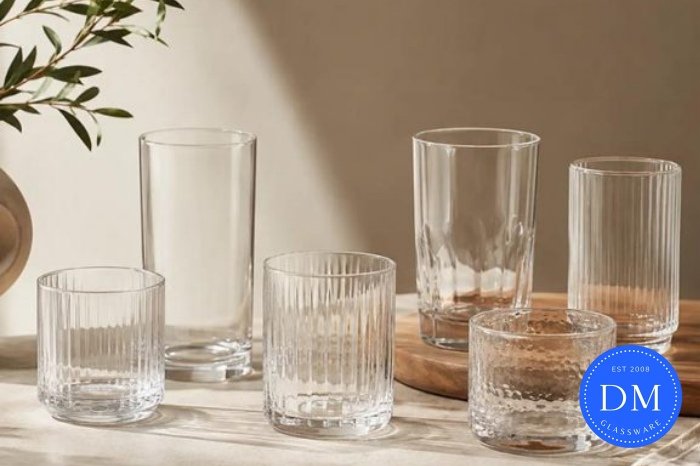
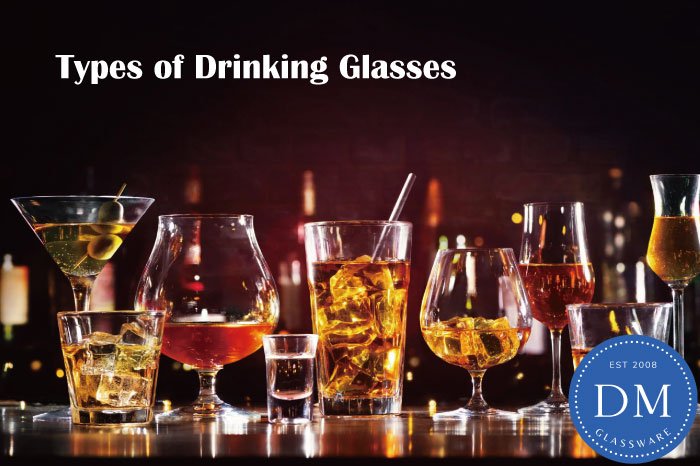
Build a small assortment map before approaching suppliers. For each proposed SKU, record the target customer, beverage use, target retail price, expected launch period, store count, online or in-store channel, and whether the item is permanent or seasonal. Use the DM drinking glass collection to compare available shapes, then shortlist only models that have a clear role in your range.
Define the Product Specification Before Comparing Prices
A useful specification separates what consumers see from what the factory must control. Identify the model, capacity, key dimensions, weight range, material, color, rim, base, decoration, set count and packaging. Mark shelf or automated-packing requirements as critical.
Capacity and usable dimensions
Confirm how capacity will be measured and whether the box needs a capacity claim. Record height, maximum diameter, rim diameter and base diameter because they influence shelf fit, inserts and cartons. For a multi-size family, check that the proportions look intentional together.
Weight, wall distribution and consumer feel
Glass weight affects material use, freight and perceived value, but heavier is not automatically better. Review the distribution: a thick base can feel stable, while an excessively heavy set raises logistics cost. Approve a physical sample rather than judging weight from a photo.
Rim, base and stackability
Specify whether the rim should be rounded, cut and polished, or finished by another approved method available for the model. Check the drinking edge by touch and visual inspection. For stackable designs, define the intended nesting depth and contact points; ordinary straight tumblers should not be treated as stackable unless the design and validation support that use.
Choose Set Count and Size Combinations for the Shelf
Pack count depends on category strategy. A smaller set can lower price and package size. A larger family set can add value but increases weight and shelf use. Mixed sizes cover more occasions; same-size sets are simpler for shoppers and replenishment.
Review each option using the same questions:
- Does the set count match the target household or gifting occasion?
- Will the package fit the retailer’s shelf depth, height and facing plan?
- Can the customer understand the sizes and quantities immediately?
- Does the set create a clear value difference from nearby SKUs?
- Can the inner pack and master carton be handled efficiently in the warehouse?
- Will the same configuration work for e-commerce, or is a separate mailer needed?
Do not finalize the glass and packaging independently. A few millimeters added to each cavity can change the retail-box footprint and the number of units per master carton. Ask for a packaging drawing with the product sample before commercial approval.
Build the Target Cost Backward From the Retail Price
Define what the target cost includes. Decoration, box, insert, labels, master carton, inspection and transport can materially change landed cost. Compare quotations using one agreed packaging configuration and Incoterm.
For value engineering, identify what shoppers notice and what can be simplified. A stock mold may reduce development risk. A simpler decoration may protect the price point. Reducing unnecessary packaging components can lower both cost and assembly complexity. However, removing structural protection only to meet a unit-cost target can transfer expense into breakage, claims and replacements.
Use Decoration to Create a Range, Not to Hide a Weak Product Brief
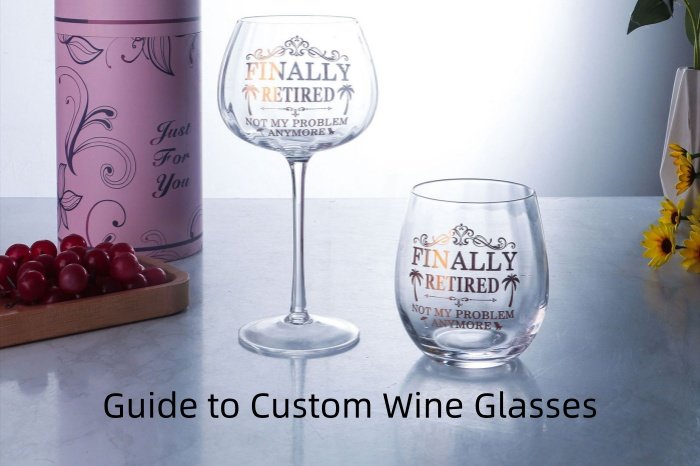
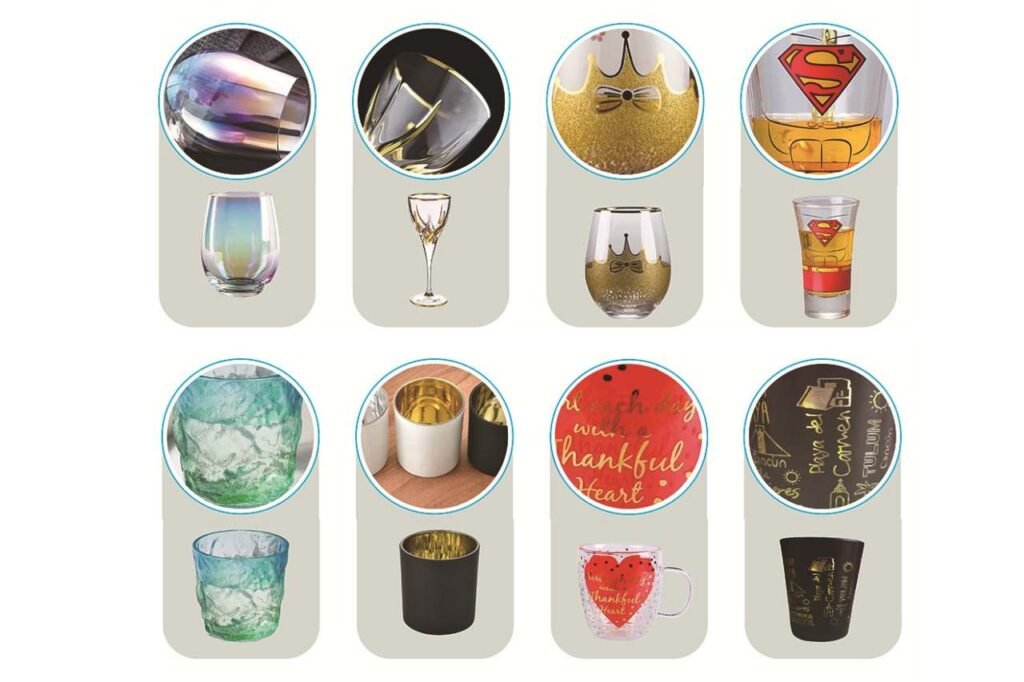
Color, decal, printing, frosting and engraving can distinguish a range, but each affects price and inspection. Define artwork area, position, color reference, orientation, allowable variation and required testing. A digital rendering cannot prove the result on curved transparent glass.
Approve a decorated sample inside the intended package. Check logo visibility, compare colors with the approved reference and classify decoration defects before production. The DM product gallery helps teams compare plain, molded and decorated directions.
Decide When Machine-Made Production Fits the Program
Machine-made production often fits recurring supermarket volumes because it supports continuous output and repeatable forming. It works best when model, mold, material, finishing and inspection requirements are clear, and when volume, target cost and replenishment justify the setup.
Machine-made should not become the first keyword in every consumer-facing decision. Buyers should first choose the product and retail proposition, then confirm the manufacturing method that can meet them. A hand-blown option may suit a smaller premium or design-led range when lower initial quantity and mold investment matter more than unit price. For a mass-retail core set, however, hand production may introduce cost and variation that do not support the brief.
Specify Retail Packaging, Barcodes and Master Cartons Together
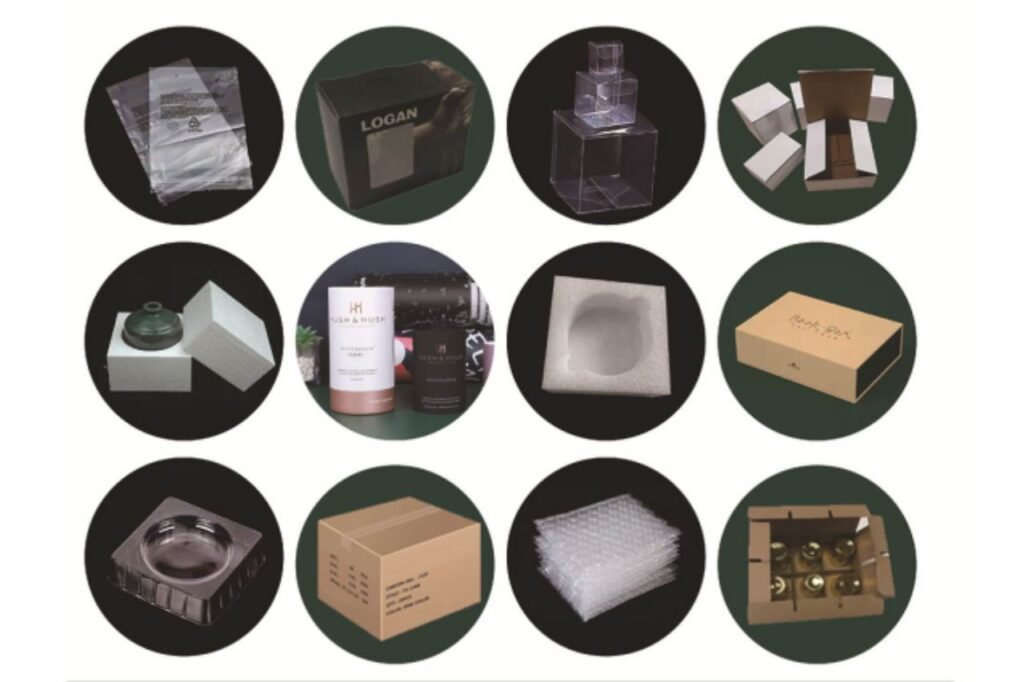
The retail package must present and protect the set while supporting store operations. Confirm box, insert, orientation, opening, label area, artwork panels and required information. Supply the correct barcode for each SKU and verify it on a printed proof.
Specify retail units per carton, orientation, void control, carton marks and handling route. If the SKU also sells online, decide whether it needs a mailer. Shelf-ready and courier-ready packs solve different problems, so test the complete required configuration.
Approve Quality Criteria That Match the Retail Position
Distinguish critical functional problems from minor visual variation. Review dimensions, capacity, weight, stability, rim, cracks, chips, inclusions, mold marks, decoration and packaging. Agree limits for the selected product; do not copy tolerances from unrelated shapes.
Use an approved golden sample and signed specification as the reference. Record sample and artwork revisions. Provide any required sampling plan, test or report before production planning. Phrases such as ‘best quality’ are not measurable criteria.
Plan Reorders Before the First Purchase Order
Plan how molds, decoration files, packaging artwork and approved samples will be identified for repeat orders. Share a forecast and define replenishment lead-time assumptions. Seasonal peaks and packaging or decoration capacity can affect the schedule even for an existing model.
For a long-term core SKU, record every feature that must remain consistent: dimensions, capacity, weight range, glass color, decoration reference, pack count, barcode and carton configuration. When a change is proposed, require a revised sample or written approval before it enters the next batch.
Supermarket Drinking Glass Set RFQ Checklist
- Retail channel, countries, launch date and expected program duration.
- Target consumer, beverage use and target retail or landed cost.
- Glass model, material, capacity, dimensions, weight and rim/base requirements.
- Set count, same-size or mixed-size configuration and product orientation.
- Decoration artwork, color references, position and approval method.
- Retail box, insert, barcode, labels, master carton and e-commerce needs.
- Required samples, inspections, test methods and acceptance criteria.
- Forecast, delivery window, reorder plan and change-control expectations.
Frequently Asked Questions
Should every supermarket drinking glass set be machine-made?
No. Machine-made production is normally a strong fit for recurring volume, consistent specifications and competitive unit cost. A hand-blown range may be appropriate for lower-volume premium positioning. Choose the product and commercial brief first, then evaluate the viable process.
What is the best number of glasses in a retail set?
There is no universal best count. Compare target price, household use, shelf dimensions, package weight, competitor assortment and master-carton efficiency. Test more than one configuration if the commercial difference is meaningful.
Can one retail package work for stores and e-commerce?
Possibly, but it should be evaluated for both routes. Store packaging prioritizes presentation and shelf handling, while parcel delivery adds multi-direction impacts and individual shipment. A separate outer mailer may be required.
What sample should a supermarket buyer approve?
Approve the actual glass, decoration, set configuration, insert, printed packaging and barcode proof. Keep a controlled golden sample and written specification, and identify any remaining items that require production verification.
What information is needed for an accurate quotation?
Provide the product specification, quantity and forecast, destination, decoration files, pack count, packaging structure, quality and testing requirements, delivery window and requested Incoterm. Missing packaging or inspection details can make early price comparisons misleading.
Prepare a Comparable Brief for Your Next Supermarket Program
A successful drinking glass set begins with a retail brief that the factory can convert into measurable product and packaging requirements. Define the SKU role, capacity, weight, set count, target cost, decoration, box, quality criteria and reorder plan before comparing suppliers. This makes quotations more comparable and reduces changes after sampling.
To develop a new supermarket range, contact the DM Glassware team with your target market, preferred glass shapes, set count, packaging concept, forecast and delivery window. The team can review available products and manufacturing options before preparing samples and a detailed quotation.