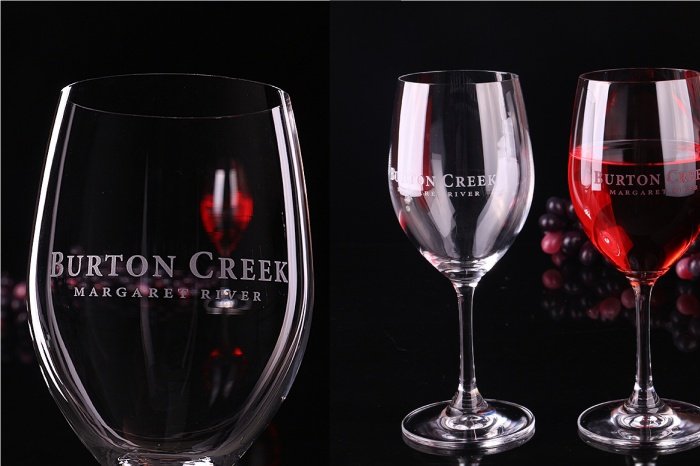

For a premium bar, hotel or restaurant project, approving hand blown martini glasses or coupe glasses is not a beauty contest. The sample must show that the design can be produced repeatedly, handled safely and presented consistently enough for the intended price level. A glass may look elegant in one photograph yet feel unstable on a tray, have an uncomfortable rim, or vary too much across a set.
The buyer’s job is therefore to convert subjective words such as “refined,” “thin” and “balanced” into observable acceptance points. This guide explains how to review a sample set, record the result and decide whether hand-blown production fits the project. It complements DM Glassware’s cocktail glass collection by focusing on product engineering and sample approval rather than drink styles.
Start With the Serving and Commercial Requirements
Before inspecting glass quality, define what the glass must do. A sharply angled martini bowl creates a different center of gravity from a rounded coupe. A long, fine stem may support a luxury presentation but can be less forgiving during tray service, washing and storage. A wider foot can improve stability but may reduce the number of glasses that fit in a rack or gift box.
Give the supplier the intended drink volume, desired headspace, venue type, washing method, storage or rack limits, decoration area, packaging format and target market position. Also identify the dimensions that cannot change because of an existing box, shelf, tray or bar setup. Without this context, a supplier can make an attractive sample that is wrong for the operation.
Choose the Process After the Product Brief
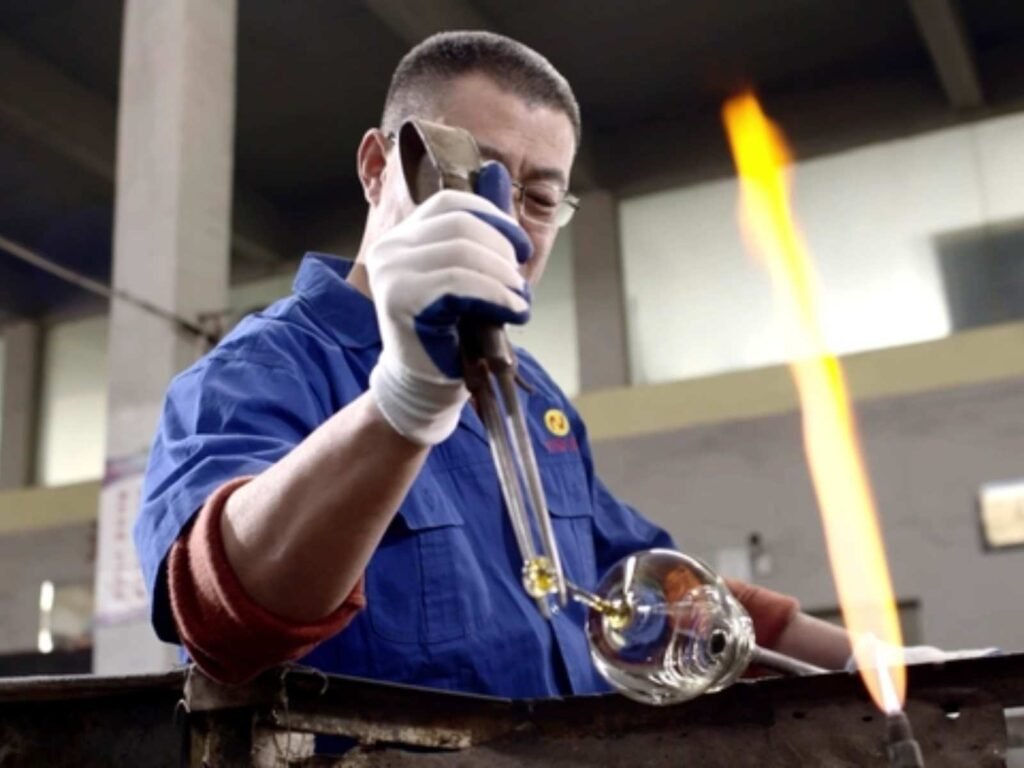
Hand-blown production should be a sourcing decision, not the starting keyword for every cocktail glass. It is often appropriate when the design requires a distinctive bowl, refined stem, premium handmade character or a project quantity that does not justify a machine-made production setup. It can also reduce tooling exposure for certain lower-volume custom concepts, although actual feasibility and cost depend on the design.
Machine-made production is usually stronger when the buyer needs high volumes, tight repeatability and a lower unit-cost structure. Hand-blown pieces naturally show more variation, so the buyer must approve a realistic range rather than one perfect piece. Ask the factory to recommend the process after reviewing quantity, design, budget, timing and consistency expectations. DM Glassware’s manufacturing and customization capabilities cover both routes, allowing the process to follow the commercial brief.
Use a Sample Set, Not a Hero Sample
One carefully selected glass cannot reveal normal handmade variation. Request enough pieces to compare shape, height, weight, rim, stem and foot across a small set. The exact sample quantity should reflect design risk and project value; there is no universal number. Lay the pieces together on a level, well-lit surface, then view them from the front, side and above.
Separate the Sampling Stages
Early samples may answer only one question, such as bowl proportion or logo placement. A later sample should incorporate the agreed changes. The final approved reference should represent the intended material, forming method, rim treatment, decoration and packing configuration. Label each version with item number and date so an outdated sample cannot accidentally become the production standard.
If possible, buyer and supplier should retain matching approved references plus the same specification sheet. Photos are useful for comments, but they do not replace the physical reference: balance, rim feel, weight distribution and subtle distortion are difficult to judge on screen.
Inspect Bowl Shape and Symmetry
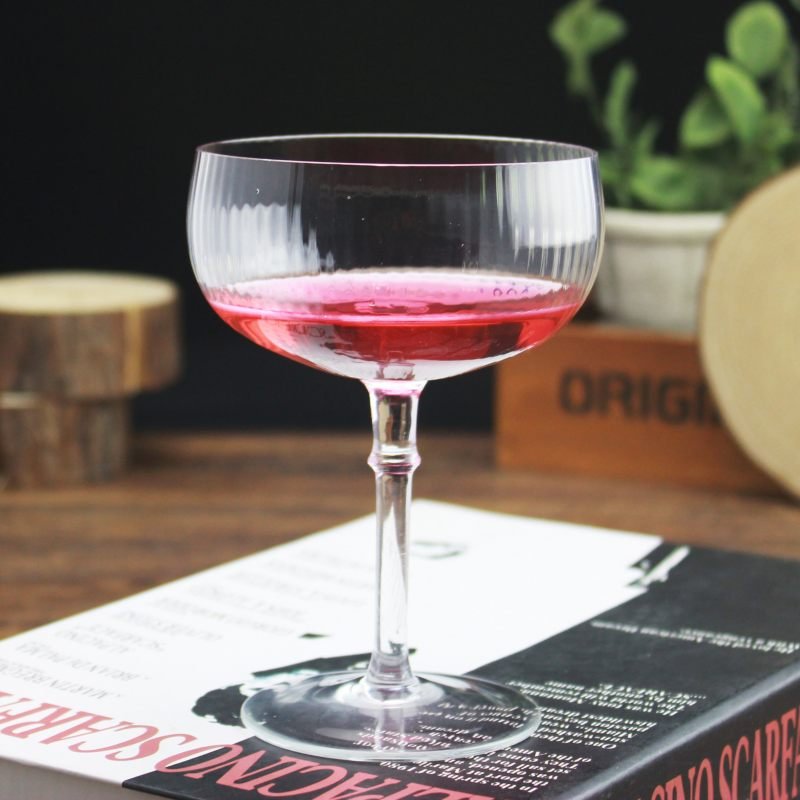
For a martini glass, check whether the V-shaped bowl is centered over the stem and whether the two sides read as a consistent profile. Look across the rim to identify ovality, waviness or a tilted opening. For a coupe, compare the depth and curvature of the bowl; an uneven curve can make a set look mismatched even when nominal capacity is similar.
Rotate each glass slowly against a simple background. Observe whether the bowl appears to wobble around its axis or whether one side is noticeably fuller. Then compare the set at normal viewing distance. Minor handmade differences may be acceptable, but a difference that changes presentation, fill line, stacking clearance or saleability should be recorded as a functional or commercial concern—not dismissed as “handmade character.”
Test Balance and Foot Stability
Place every glass on a verified level surface and press lightly around the foot. It should not rock in normal use. View the stem from two directions to see whether it is centered over the foot and aligned with the bowl. A foot can be visually round yet still have uneven contact, so the touch test matters.
Next, simulate service. Fill the glass to the intended serving line with water, lift it by the stem, place it on a tray and make gentle turns. This is not a formal laboratory test; it is a practical handling review. Compare martini and coupe shapes separately because their weight distribution is different. Record any tendency to tip, excessive top-heaviness or uncomfortable grip. Aesthetic thinness should never be approved without considering bar handling.
Evaluate the Rim, Stem and Joints
Rim Quality
Run a clean fingertip carefully around the rim and inspect it under angled light. Look for chips, sharp points, rough areas, excessive waviness, local thick spots or an uneven polished edge. Compare how the rim feels across the set. The target thickness and acceptable visual variation must be agreed for the specific design; copying a tolerance from another glass can create an unrealistic standard.
Stem and Connections
Inspect stem straightness, diameter consistency and the transitions where stem meets bowl and foot. The connections should look clean enough for the agreed grade and should not contain obvious cracks or sharp protrusions. Check whether decorative color, bubbles or tool marks near the joint were intentionally approved or represent unwanted variation. For a long stem, compare multiple pieces side by side because small alignment differences become more visible.
Measure What Matters—and Agree the Range
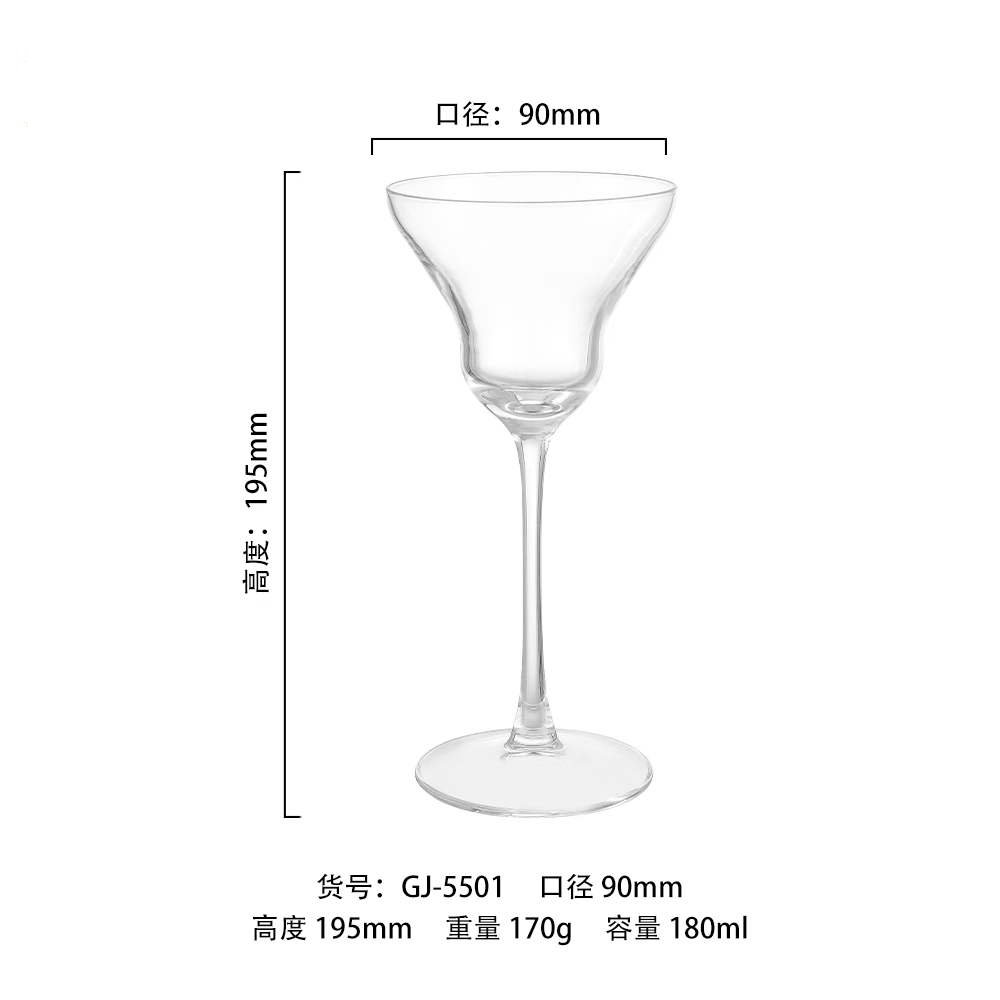
A useful specification normally records total height, rim diameter, maximum bowl diameter, foot diameter, nominal capacity and target weight. Depending on the design, it may also include stem length, decoration position, fill line or packed dimensions. Measure several samples using the same method and equipment.
Do not invent acceptance limits after production begins. Ask the factory what range is achievable for that design and process, then decide whether it suits the sales channel. Capacity should be measured using an agreed definition—such as to a specified fill point or to the brim—because different methods produce different numbers. Write the method on the approval sheet.
Approve Decoration and Packaging on the Actual Glass
A logo can change the approval questions. Confirm artwork version, size, position, orientation, color reference and the acceptable appearance of edges or joins. If durability testing is required, agree the method and pass criteria before testing. Do not assume every decoration is suitable for every commercial washing system.
The final sample should also be checked in its intended insert, retail box or bulk pack. Stemmed glasses need controlled clearance around the bowl, stem and foot. Confirm pack count, orientation, labeling and carton fit. DM Glassware’s downloadable glassware catalogs can help buyers shortlist formats, but project-specific packaging still needs approval with the selected glass.
Hand-Blown Sample Approval Checklist
- Confirm item number, sample version, material, process and intended market.
- Compare multiple pieces for bowl profile, symmetry, height and set appearance.
- Check the rim for smoothness, roundness, local thickness changes and damage.
- Check stem straightness, bowl-to-stem alignment and both connection points.
- Place every foot on a level surface and test for rocking.
- Review balance using the intended serving volume and realistic handling.
- Measure agreed dimensions, capacity and weight using documented methods.
- Approve decoration on the actual glass and record the artwork version.
- Test the intended packaging fit and retain matching approved references.
FAQ
Are small differences between hand-blown glasses defects?
Not automatically. Slight variation is inherent to hand forming, but it must remain within the range agreed for the product and must not compromise stability, rim safety, capacity, presentation or packaging. Define acceptable examples during sampling instead of debating them after shipment.
Is one perfect sample enough to approve production?
Usually not for a design-sensitive hand-blown project. A set shows the variation that one selected piece hides. The appropriate number depends on complexity, decoration and commercial risk.
Should a buyer specify exact tolerances?
The buyer should specify what matters, but the achievable range should be agreed with the factory for the exact design and process. Arbitrary limits copied from another item may raise cost or be technically unsuitable.
When is machine-made production a better option?
It is generally worth evaluating when volume, unit cost and repeatability are more important than handmade variation or design flexibility. The decision should follow the quantity, budget, shape and uniformity requirements.
Build an Approval Standard Before Mass Production
The strongest approval is a system: a representative sample set, written measurements, agreed variation, artwork records and packaging confirmation. It gives the bar or hospitality buyer a realistic picture of the product and gives the factory a usable reference for production and inspection.
To review a new martini or coupe glass project, contact the DM Glassware team with your target shape, quantity, serving volume, budget, decoration and packaging requirements. The team can discuss whether a hand-blown or machine-made route better fits the brief and what should be confirmed during sampling.