How to Pack Thin-Stem Wine Glasses for Export
Thin-stem wine and champagne glasses can arrive safely after international shipping, but only when the package is designed around the actual glass, sales channel and distribution route. A carton that works for a short palletized delivery may fail after sea freight, warehouse handling and parcel delivery. Buyers should therefore treat packaging as a product specification, not as an accessory selected after the glass is approved.
This guide explains what buyers should agree with a factory before production. It does not prescribe one universal carton, drop height or breakage target. Those values require project-specific samples and tests because glass dimensions, weight, pack count and route change the risk.

Why Thin-Stem Glasses Need a Product-Specific Pack
A stemmed glass has three connected zones: bowl, stem and foot. Each zone reacts differently to shock and compression. The bowl needs separation from neighboring bowls. The foot needs a flat, stable support. The stem must not become the load-bearing point when the carton is squeezed or dropped.
Common failure paths
- Bowl-to-bowl contact creates chips, scratches or a crack that grows during transit.
- A loose glass moves vertically and the foot or rim strikes the pack wall.
- A divider presses directly on the stem instead of supporting the bowl and foot.
- An oversized retail box leaves enough free space for repeated impact.
- A weak master carton loses shape when stacked in a container or warehouse.
The first packaging question is not “How many glasses fit in one carton?” It is “Where can this exact glass move, touch or carry load?” Answer that question with a physical sample before optimizing carton quantity or container utilization.
Freeze the Glass Specification Before Designing the Pack
Packaging engineers need the production glass, not only a rendering. Record total height, maximum bowl diameter, rim diameter, foot diameter and weight range. Also note decoration, surface finish and any areas that can be scratched. A gold rim, printed logo or painted surface may require a softer contact material than an undecorated glass.
Use the production method as a packaging input
Machine-made and hand-blown are process choices, not the first level of the buying decision. For a high-volume, standardized wine glass, machine production may give tighter dimensional consistency and support a repeatable divider. For a lower-volume or design-led hand-blown glass, the pack may need more allowance for agreed variation. Neither process automatically determines the correct package. The cavity, divider and carton must be checked against the approved product range.
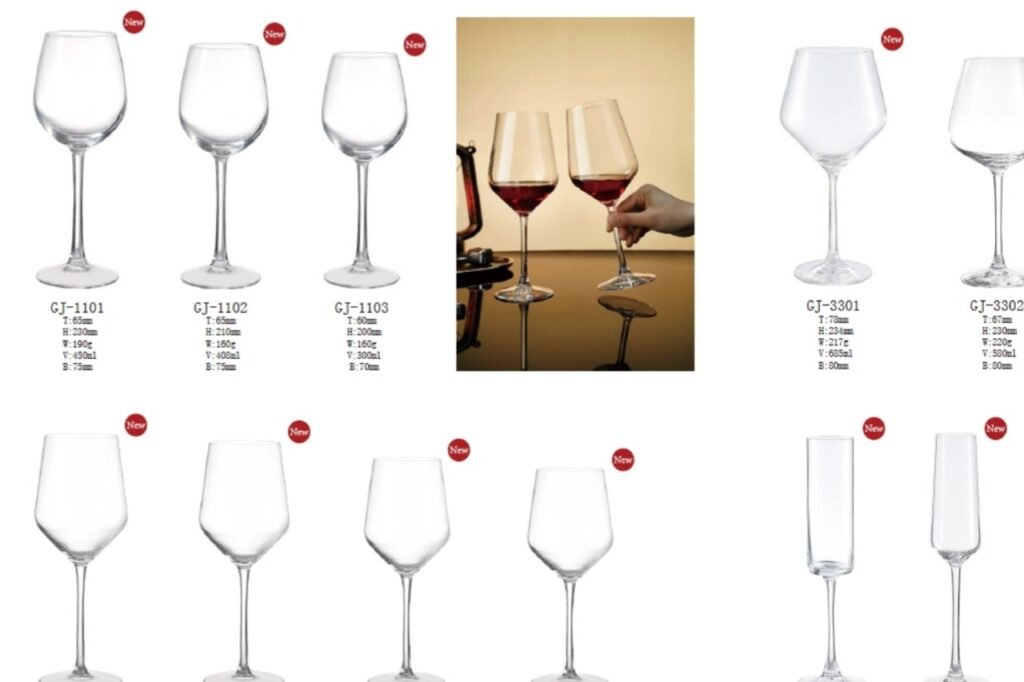
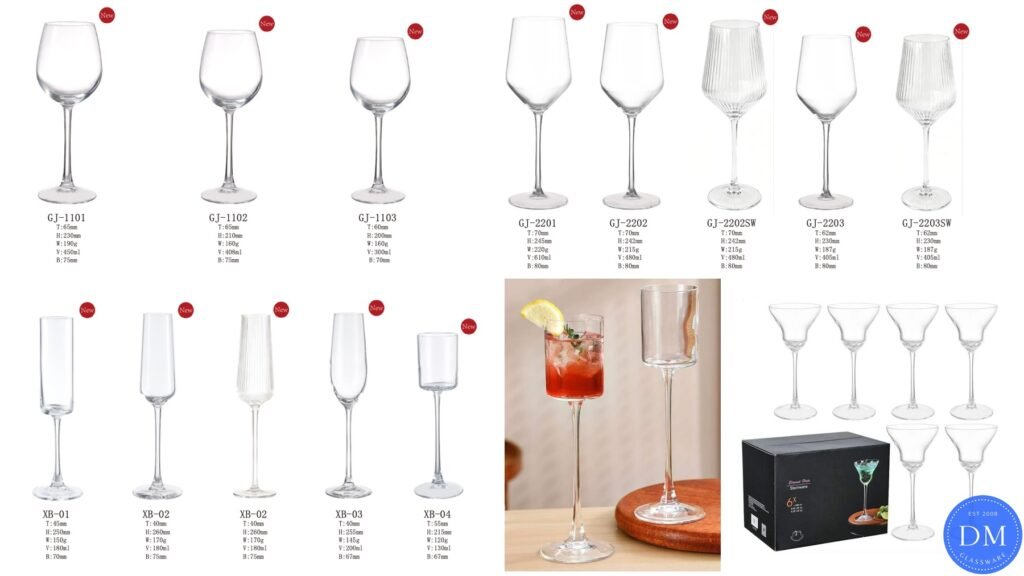
If you are still selecting the glass, compare suitable shapes in DM Glassware’s wholesale wine glasses collection before asking for a packaging quotation. Packaging cost cannot be evaluated accurately when the dimensions, pack count or decoration are still changing.
Build the Primary Pack Around Immobilization
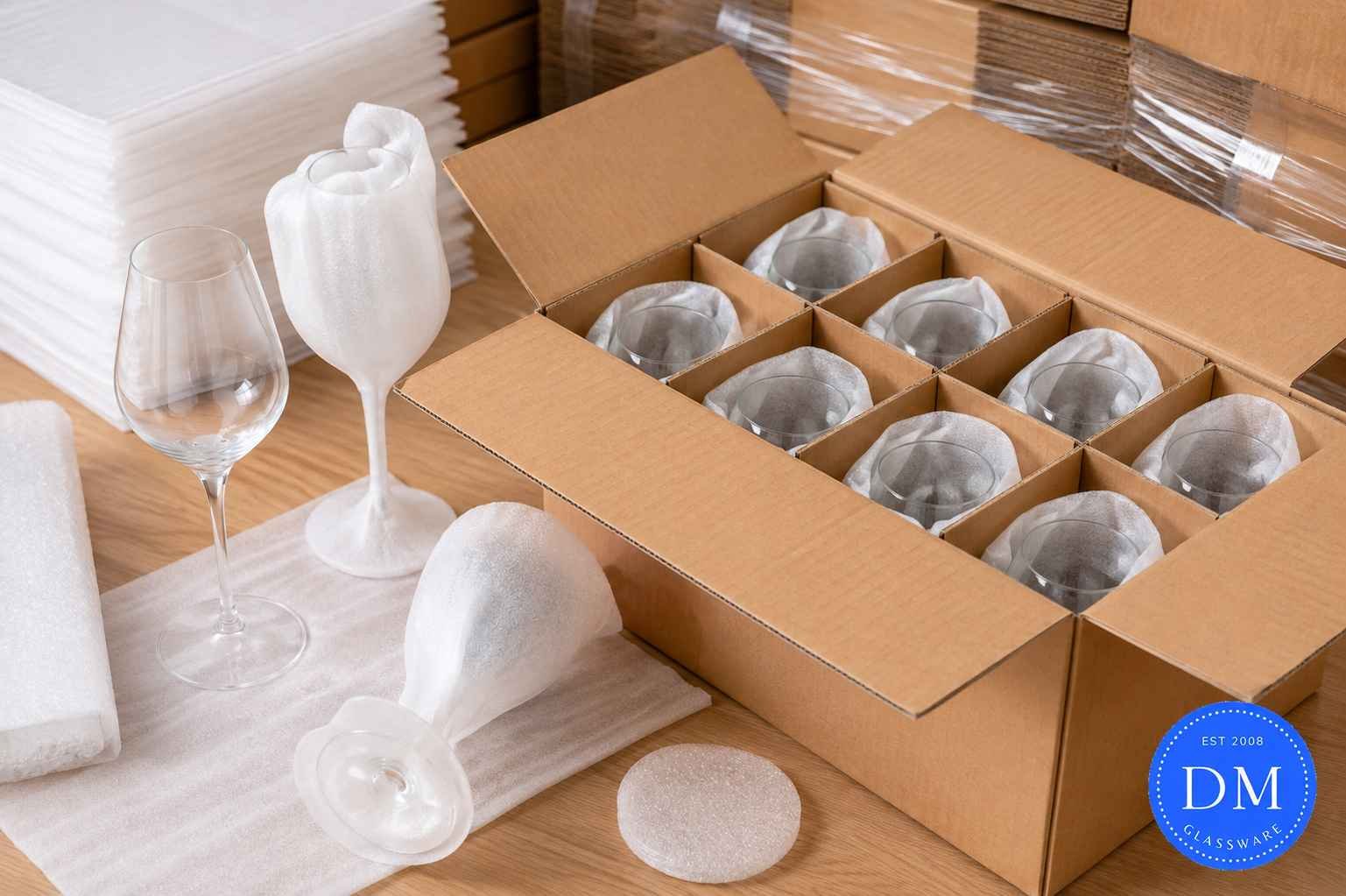
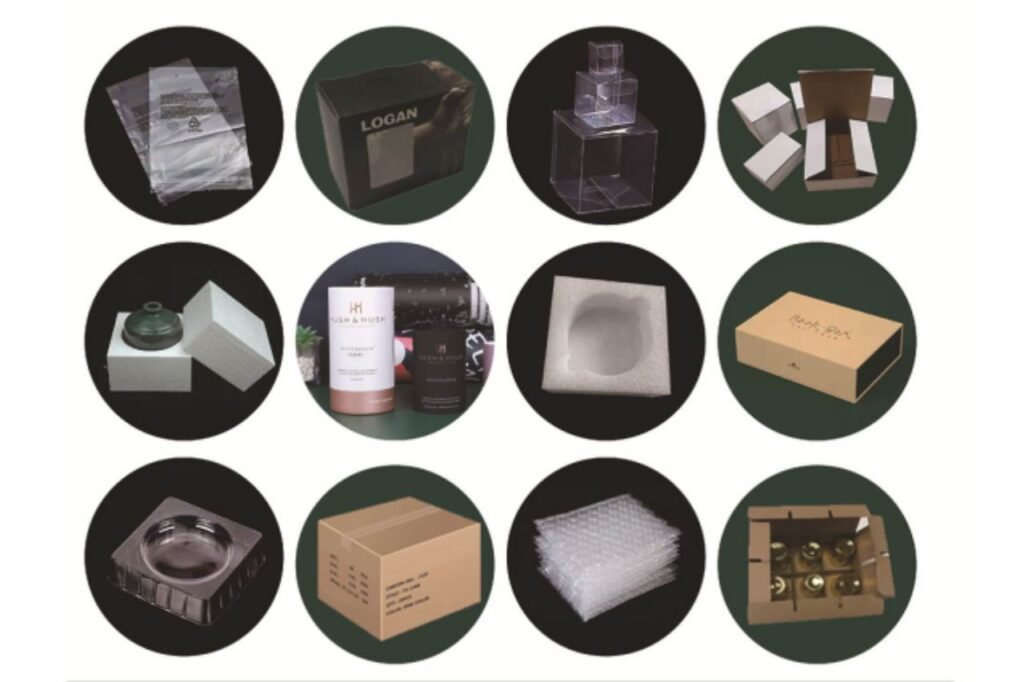
The primary pack is the material that holds each glass or retail set. Its job is to stop contact and limit movement without concentrating pressure on fragile points. Corrugated partitions, molded pulp, foam, paper sleeves and fitted trays can all work, but each has different cost, appearance, sustainability and protection implications.
Compare the main packing structures
Corrugated cell dividers — Efficient for bulk and hospitality packs; performance depends on cell size, board grade, height and fit.
Molded pulp trays — Useful when a shaped cavity and plastic reduction are priorities; tooling, moisture resistance and surface contact require review.
Foam or EPE components — Provide cushioning for fragile or premium sets; buyers should confirm material, thickness, recovery and destination-market requirements.
Retail insert plus color box — Supports presentation and barcode labeling; the color box still needs protection inside a suitable master carton.
Check contact points, not just material names
Ask the supplier to show a packed sample from the top, side and bottom. The bowl and foot should be located securely, while the stem remains free from harmful pressure. Shake the closed retail pack gently and listen for movement. This is a screening check, not a substitute for transport testing, but it quickly reveals poor fit.
Design the Retail Pack and Master Carton as One System
A strong master carton cannot fully correct a loose retail insert, and a good color box may still fail inside an underfilled master carton. Review the complete system: glass, sleeve or tray, retail box, master-carton dividers, void fill, carton closure, pallet pattern and container loading.
Retail and e-commerce require different assumptions
For palletized retail distribution, cartons may remain grouped for much of the route. An e-commerce unit can experience repeated sorting, edge impacts and delivery in different orientations. If one SKU will be sold through both channels, tell the factory before approval. The e-commerce pack may need a separate mailer or additional cushioning rather than simply using the retail box alone.
Confirm the final pack count early. A 2-piece, 4-piece or 6-piece set changes the insert geometry, box weight, barcode panel and master-carton arrangement. It also affects landed cost and replacement economics. Buyers can use DM Glassware’s downloadable catalogs and resources to shortlist products, then request packaging drawings for the selected models.
Create a Project-Specific Validation Plan
Do not approve packaging only because the sample looks neat. Agree on a test plan that reflects the route and who will handle the goods. Possible checks include vibration, repeated impact, drop or edge-drop sequences, compression or stacking, and a trial shipment. The applicable procedure, sample quantity, orientation, conditioning and acceptance criteria should be written into the project file.
Use a sensible approval sequence
- Approve the glass dimensions and representative weight range.
- Approve a complete packed sample using intended production materials.
- Run the agreed packaging tests and record the configuration tested.
- Open every tested pack and inspect rims, bowls, stems, feet and decoration.
- If the design changes, determine whether the test must be repeated.
A passing result applies to the tested configuration, not automatically to every glass in the range. Changing bowl diameter, stem length, board grade, insert thickness or pack count can change performance. Keep the approved packing drawing and sample as production references.
Define Packaging QC Before Mass Production
Packaging quality control should cover materials and assembly. A practical specification can identify carton dimensions, board construction, insert dimensions, pack count, orientation, sealing method, label position and barcode data. It should also show photographs or drawings of the approved packing sequence.
Useful production checks
- Verify that the correct glass model and packaging components are at the line.
- Check divider height, slot engagement and cavity fit at defined intervals.
- Confirm glasses are clean and decoration is protected before packing.
- Check retail-box quantity, master-carton quantity and label information.
- Inspect finished cartons for deformation, poor sealing or excess empty space.
- Retain packing records or reference samples for repeat orders when appropriate.
DM Glassware’s quality-control process can be reviewed on the Why DM page. For a quotation, buyers should still state their own market requirements and ask which inspections, samples and test records will be included for the specific order.
Control Container Loading and Shipment Handover
Packaging can pass an internal check and still be damaged by poor loading. Cartons should be arranged to reduce unsupported gaps and unstable stacks. Heavy goods should not load directly onto fragile stemware cartons. Pallets, slip sheets, desiccants or container liners may be considered according to route, climate, buyer policy and loading method.
Document the handover. Record carton condition, loading pattern, palletization if used, container number and seal information. Photos taken during loading help both buyer and supplier understand whether a later claim relates to product packing, container handling or downstream parcel delivery.
What to Send in Your Packaging RFQ
A useful request is more than “export-safe packing.” Send the information below so the supplier can propose and price a realistic structure.
- Glass model, drawing or physical sample, including decoration.
- Required retail pack count and preferred packaging materials.
- Sales channel: retail shelf, hospitality bulk, e-commerce or mixed.
- Destination market and expected transport route.
- Palletized or floor-loaded shipment preference.
- Barcode, label, color-box and language requirements.
- Requested test method or retailer packaging standard, if one applies.
- How breakage will be measured during approval or a trial shipment.
With these inputs, the factory can compare protection, presentation, carton efficiency and cost. If the project is not yet fully defined, contact DM Glassware with the glass type, order range and sales channel, and the team can help identify the packaging decisions that need to be confirmed.
Frequently Asked Questions
What is the best packaging for thin-stem wine glasses?
There is no single best material. The correct design securely locates the bowl and foot, prevents glass-to-glass contact, avoids pressure on the stem and passes a test plan suited to the route. The answer may be a divider, molded tray, foam component or combined retail-and-master-carton system.
Should machine-made and hand-blown glasses use different packaging?
Sometimes. The important factor is the approved dimensional and weight range. Hand-blown products may need more allowance for agreed variation, while a consistent machine-made model may fit a tighter cavity. The package should be validated against actual production samples.
Can a color box be used as the shipping carton?
Only if the complete configuration is designed and validated for that route. A presentation box is not automatically suitable for export or parcel handling. Many projects use a retail box inside a separate master carton.
How should buyers set a breakage target?
Define the measurement point, sample size, route and inspection method with the supplier. Do not use an unexplained percentage. A trial shipment can provide useful evidence, but its result should be interpreted together with loading and downstream handling records.
Plan the Pack Before You Approve the Order
For thin-stem wine and champagne glasses, packaging performance begins with the glass specification and ends with shipment handover. Approve the product, packing structure, test plan and QC checkpoints as one system. This reduces avoidable changes after production starts and gives both buyer and factory a clearer basis for repeat orders and claims.
Explore DM Glassware’s wine glass range or contact the team with your model, pack count, destination and sales channel to discuss a project-specific export packaging proposal.