Which Wine Glass Is Best for Red Wine?
Many buyers think choosing a red wine glass is simple. In real business use, it is not. I see this mistake often in bulk orders for restaurants and brands. The wrong glass causes poor wine taste, higher breakage, and guest complaints.
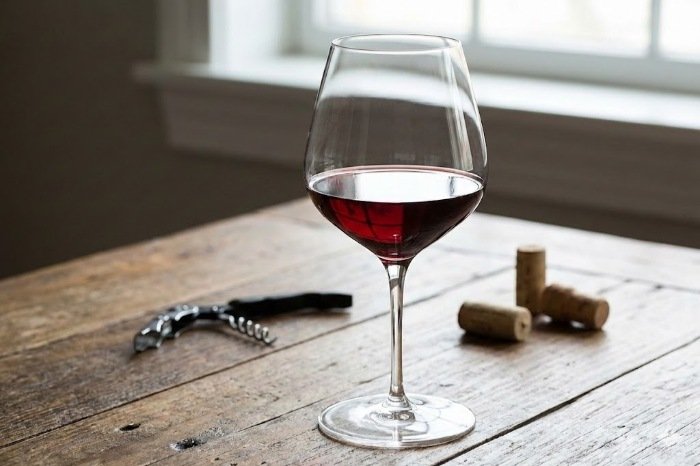
The best wine glass for red wine is a large bowl glass with enough room for aeration, a gently tapered rim to control aroma, and a balanced thickness for daily commercial use. This shape helps red wine open, softens tannins, and creates a smoother, more balanced drinking experience.
I write this from real experience at DM Glassware. I work with restaurants, hotel groups, wine brands, and distributors. I help buyers choose red wine glasses for long-term use, not for one dinner. This article explains every key point clearly and in practical language.
Why Choosing the Right Red Wine Glass Matters?
Many buyers invest heavily in wine but treat the glass as a basic container. This mismatch creates hidden problems.
Choosing the right red wine glass matters because the glass directly controls aroma release, air contact, and how wine reaches the mouth, which affects taste perception and guest satisfaction.
Wine glass matters more than you think
How the proper red wine glass improves taste and aroma
Red wine contains aroma compounds that need space and air. When wine is poured into a small or narrow glass, these aromas stay trapped or escape too fast. The result is a flat smell and sharp taste.
In a large bowl red wine glass, wine spreads along the glass wall. When the guest swirls the wine, air mixes with the liquid. This releases aroma. Aroma strongly affects how we feel taste. Even average wine feels better in the right glass.
In commercial service, guests may not say “this glass is wrong.” Instead, they drink slower, enjoy less, and order less. Over time, this affects revenue.
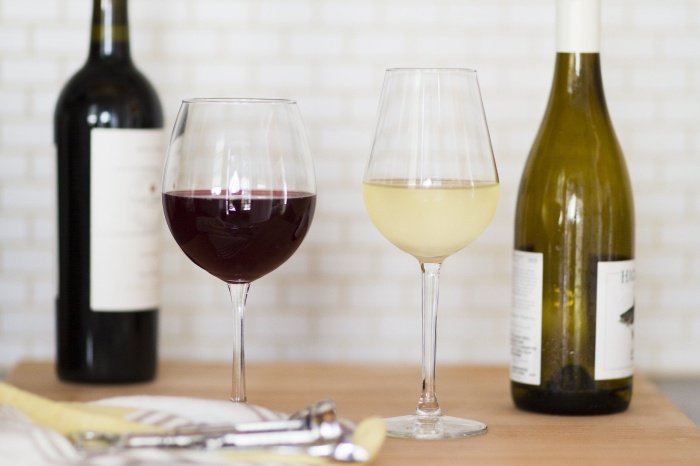
Why red wine glasses are bigger than white wine glasses
Red wine has more tannins and complex structure. These elements feel harsh without air. A bigger bowl increases oxygen contact and softens the wine.
White wine focuses on freshness and acidity. Too much air removes freshness. That is why white wine glasses are smaller.
| Wine Type | Bowl Size | Reason |
|---|---|---|
| Red Wine | Large | Needs air to soften structure |
| White Wine | Small | Needs freshness and temperature control |
From a B2B view, the right glass improves wine experience without changing the wine itself.
What Makes a Red Wine Glass Different?
Many buyers ask why red wine glasses look oversized. This design is functional, not decorative.
A red wine glass is different because it is designed to manage air, aroma, and wine flow through a larger bowl and controlled rim shape.
Red wine glass shape explained in simple words
Red wine glass size and bowl capacity
Most professional red wine glasses hold between 450 ml and 750 ml. Wine is poured only one third full. The empty space is essential. It allows swirling without spilling and keeps aroma inside the bowl.
This design is standard in wine service, not a luxury feature.
Red wine stemware vs red wine goblet
Stemware keeps hands away from the bowl. This prevents body heat from warming the wine. It also allows controlled swirling.
Goblets are thicker and heavier. They are stable and easy to handle, but they reduce aroma control.
| Glass Type | Best Use | Advantage | Limitation |
|---|---|---|---|
| Stemware | Restaurants, hotels | Aroma control | Higher break risk |
| Goblet | Events, casual | Strong, stable | Less precise tasting |
For professional wine service, stemware remains the preferred option.
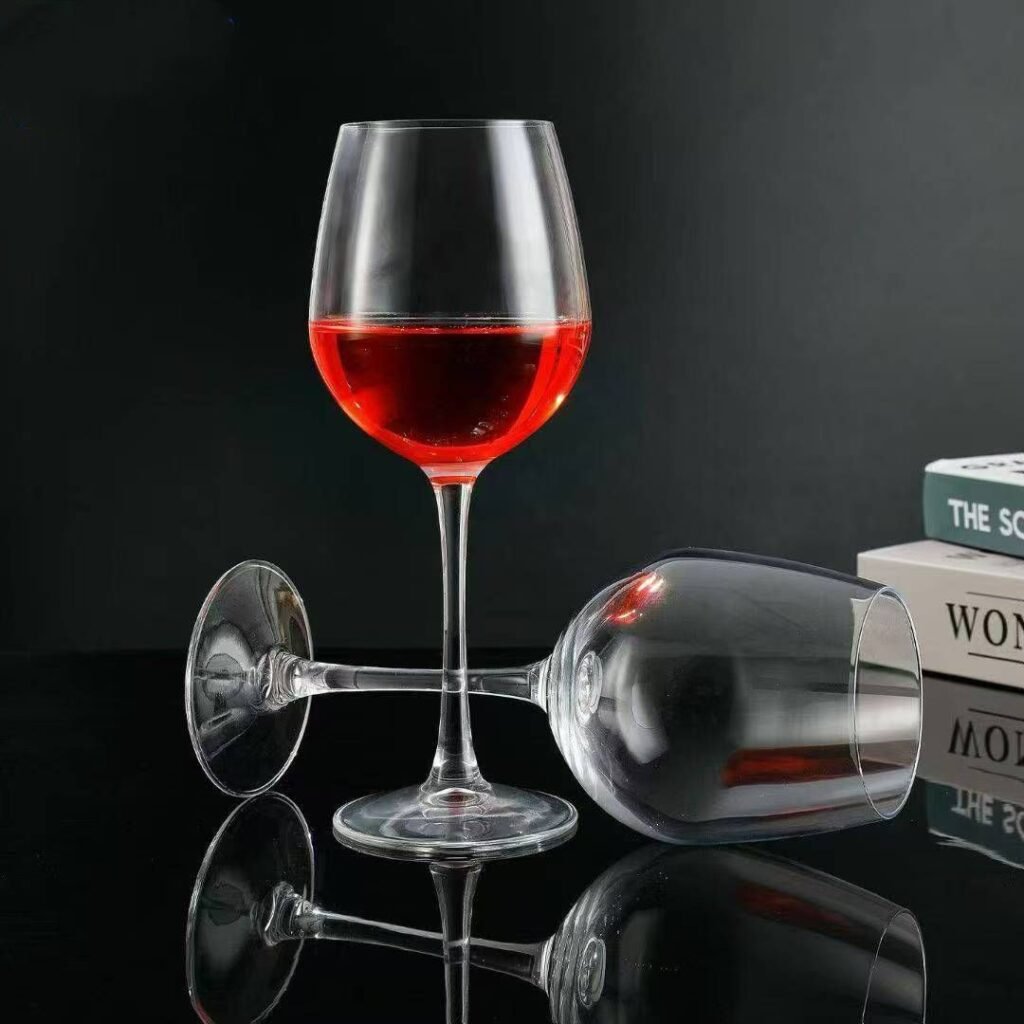
How Wine Glass Shape Affects Flavor and Aroma?
This is one of the most misunderstood areas for buyers.
Wine glass shape affects how aroma collects, how much air wine meets, and how wine spreads across the tongue.
Wide bowl wine glass and aroma release
Large bowl vs round bowl wine glass
A large round bowl allows wine to spread evenly. This increases surface contact with air. Aroma rises and stays inside the bowl, ready to be smelled.
A narrow bowl limits this process and reduces aroma intensity.
Tulip shaped wine glass vs balloon wine glass
Tulip-shaped glasses narrow at the rim. They trap aroma and guide it toward the nose. Balloon glasses offer maximum air exposure and soften bold wines.
| Shape | Aroma Control | Suitable Use |
|---|---|---|
| Tulip | Focused | Fine dining |
| Balloon | Strong aeration | Full-bodied reds |
Tapered rim wine glass and thin rim wine glass benefits
A tapered rim controls how wine enters the mouth. It directs wine toward the center of the tongue, reducing bitterness.
Thin rims feel smooth on the lips. Thick rims interrupt flow and reduce comfort. In commercial use, rim thickness must balance feel and durability.

Best Wine Glass Styles for Different Red Wines?
Many buyers ask if one glass can serve all red wines. In most businesses, yes, but understanding differences helps make better choices.
Different red wines perform best in different glass shapes based on body, aroma strength, and tannin level.
Bordeaux glass for full bodied red wine
Bordeaux glasses are tall with wide bowls. They suit wines with strong tannins and alcohol. The shape directs wine to the back of the mouth and softens harsh edges.
Burgundy glass and Pinot Noir glass explained
Burgundy glasses have very wide bowls. They help lighter wines release subtle aromas. These are common in premium wine service.
Cabernet Sauvignon glass and Merlot wine glass
These glasses balance height and width. They allow structured wines to open while maintaining balance.
Syrah wine glass and Zinfandel wine glass
Medium-wide bowls with controlled rims work best. They manage spice and fruit balance.
| Wine Style | Recommended Glass |
|---|---|
| Bordeaux | Tall, wide bowl |
| Burgundy | Extra-wide bowl |
| Cabernet | Large balanced bowl |
| Light red | Medium bowl |
For most restaurants, one well-designed large bowl glass covers all needs.

How a Red Wine Glass Enhances Taste and Drinking Experience?
Taste is not only flavor. It includes balance, flow, and comfort.
A proper red wine glass improves aroma release, softens tannins, and creates a smoother mouthfeel.
Wine aroma, wine swirl, and aroma release
Wine aeration and wine oxidation explained simply
Aeration is controlled air contact during pouring and swirling. Oxidation is slow chemical change over time. A large bowl supports gentle aeration without overexposure.
How the ideal red wine glass creates smooth taste and balanced flavor
Glass shape controls flow speed. Slower flow spreads wine across the tongue. This balances acidity and tannin.
Wine mouthfeel and overall wine tasting experience
Thin rims feel light and comfortable. Heavy rims distract attention. Comfort increases perceived quality, especially in hospitality settings.
Crystal vs Glass: Choosing the Right Material?
Material choice is one of the most important decisions for B2B buyers. I see many buyers focus only on shape, but material decides cost control, safety, durability, and brand image over long-term use.
Crystal wine glasses offer higher clarity, thinner rims, and a premium feel, while soda-lime glass offers better durability, lower cost, and stable performance for high-volume service.
There is no “better” material in all cases. The right choice depends on how and where the glass will be used.
Below, I explain this clearly from a manufacturer and bulk-supply point of view.
Crystal wine glass vs glass wine goblet
Crystal and soda-lime glass look similar at first glance, but they behave very differently in daily use.
Crystal contains added minerals. These minerals increase clarity and strength, allowing the glass to be made thinner. This creates a refined look and a smoother mouthfeel.
Soda-lime glass is the most common commercial glass material. It is thicker, heavier, and more impact-resistant. It is easier to control cost and replacement rate.
From my experience at DM Glassware, crystal is often chosen by:
Fine dining restaurants
Wine bars with tasting focus
Premium hotel lounges
Soda-lime glass is often chosen by:
High-turnover restaurants
Bars and event venues
Chains focused on cost control
The choice is not about luxury. It is about service reality.
Lead free crystal wine glass for safe use
Many buyers still worry about lead in crystal. This concern comes from old crystal production methods.
Modern crystal wine glasses are lead free. They use safe mineral formulas that meet EU and US food contact standards. At DM Glassware, all crystal products are tested for food safety before export.
Lead free crystal offers:
High transparency
Strong light refraction
Better resistance to breakage than old crystal
For B2B buyers, this means you can offer a premium product without safety risk.
Thin glass wine cup vs thick glass
Thin and thick glasses create very different user experiences.
Thin glass:
Feels smooth on the lips
Allows better wine flow
Enhances perceived wine quality
Thick glass:
Feels solid and heavy
Resists impact better
Reduces replacement cost
In real business use, thin glass breaks more easily during washing, stacking, and transport. Thick glass survives longer but reduces tasting quality.
Most of our B2B clients choose a balanced thickness. This means:
Thin enough for good mouthfeel
Thick enough for daily commercial use
This balance is more important than chasing extreme thinness.

Hand blown wine glass vs machine made wine glass
This decision affects consistency, cost, and supply stability.
Hand blown wine glasses:
Each piece is slightly different
Offer artisanal and premium image
Cost more and take longer to produce
Machine made wine glasses:
Every glass has the same size and weight
Easier for staff training and service
Ideal for bulk orders and long-term supply
For branding projects and limited editions, hand blown glass makes sense.
For restaurants, hotels, and distributors, machine made glass is the practical choice.
Consistency matters in large operations. Guests notice uneven glass height on tables more than most buyers expect.

Wholesale, Custom, and Logo Wine Glass Options (B2B Guide)
This stage is where most B2B buyers make the real decision. By this point, the question is no longer about shape or material. It is about cost control, brand image, and supply stability.
Wholesale and custom wine glasses allow businesses to lower unit cost, standardize quality, and build a consistent brand presence across all service locations.
From my experience at DM Glassware, buyers who plan long term always move beyond retail purchasing and into direct wholesale sourcing.
Below, I explain each key point in detail, from a real manufacturing and export perspective.
Wholesale wine glasses for restaurants and brands
Wholesale purchasing is not only about getting a lower price. It is about controlling risk.
When restaurants or brands buy through distributors or small traders, glass quality often changes from batch to batch. Bowl thickness, rim feel, and even glass height may differ. This creates service inconsistency and replacement issues.
Buying direct from a manufacturer solves these problems.
For wholesale buyers, direct sourcing offers:
Stable specifications across all orders
Consistent weight, size, and rim thickness
Better control over production schedules
Clear communication on lead time and MOQ
From our side, working directly with buyers also allows us to adjust designs for real service needs, such as rim reinforcement or improved stack safety.
Wholesale is not about one order. It is about building a repeatable supply system.
Custom wine glasses and logo wine glasses
Custom wine glasses are no longer only for luxury brands. Many mid-size restaurants and hotel groups now use logo glasses to strengthen brand memory.
There are several common customization methods, each with different cost and durability levels.
Decal printing:
Best for logos with color
Suitable for medium to large volumes
Dishwasher safe when fired correctly
Screen printing:
Good for simple, one-color logos
Lower cost than decal
Moderate durability
Permanent and scratch resistant
No color
Premium and clean look
Custom packaging:
Branded cartons or gift boxes
Useful for retail or promotional sales
For B2B buyers, the key is not choosing the most complex option, but choosing one that matches usage frequency and washing intensity.
Choosing the right wine glasses manufacturer
Not all factories are the same, even if the product looks similar online.
A reliable manufacturer should have:
Sufficient production capacity to support repeat orders
Clear quality control process at each production stage
Experience with international safety standards
Stable raw material sourcing
At DM Glassware, we run multi-line production and test glass weight, rim thickness, and clarity in every batch. This reduces variation over time, which is critical for chain customers.
Buyers should always ask:
Can you keep the same mold for future orders?
How do you control batch consistency?
What markets do you export to regularly?
These questions reveal real manufacturing capability.
Finding a reliable wine glass supplier
Many buyers focus on price first. In long-term sourcing, this often leads to higher cost later.
A reliable supplier offers:
Consistent quality across shipments
Clear communication and documentation
Stable lead times
Support for replacement and after-sales issues
Unstable suppliers may offer low prices, but quality variation increases breakage and complaints.
From my experience, stable quality saves more money than the lowest unit price.
Bulk red wine glasses for long-term savings
Bulk purchasing changes the cost structure completely.
With larger volumes, buyers benefit from:
Lower unit production cost
Optimized packaging and pallet loading
Reduced logistics cost per piece
Priority production scheduling
For chain restaurants and distributors, bulk ordering also allows better inventory planning and fewer emergency purchases at higher prices.
At DM Glassware, many of our long-term partners place forecast-based orders. This approach stabilizes supply and protects pricing over time.
A practical note for B2B buyers
Wholesale and custom sourcing is a strategic decision. It should be based on:
Expected yearly volume
Service environment
Brand positioning
Replacement rate
At DM Glassware, we work with buyers who think in years, not months. We help them build a glass program that supports growth, not short-term savings.
If you are planning to buy red wine glasses in bulk, starting with samples and clear specifications is the smartest first step.