
What Are Stemless Wine Glasses, Really?
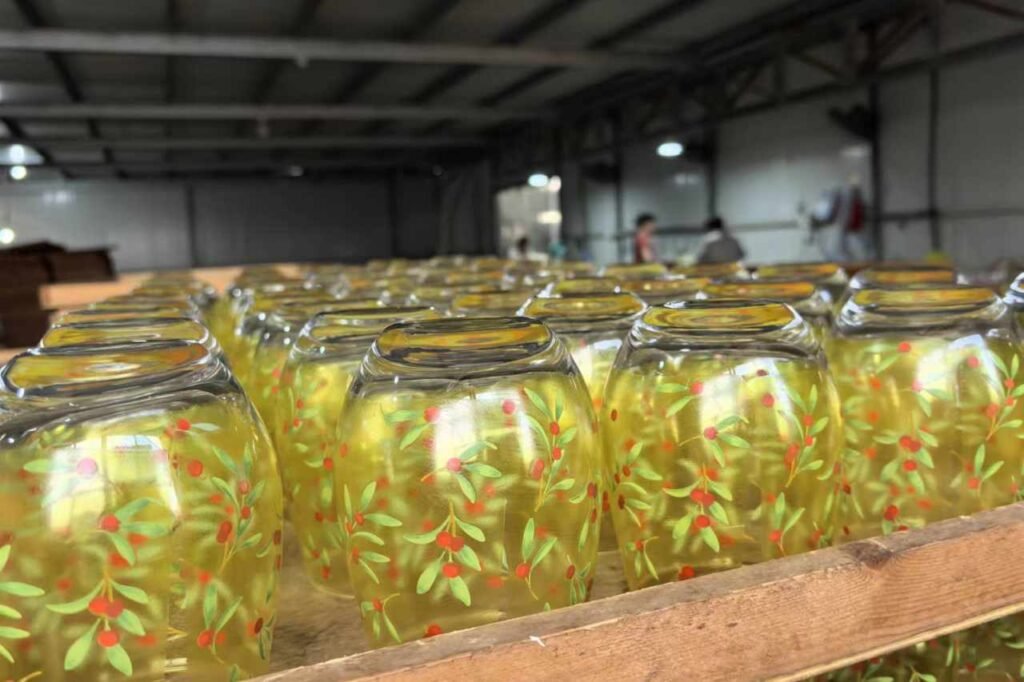
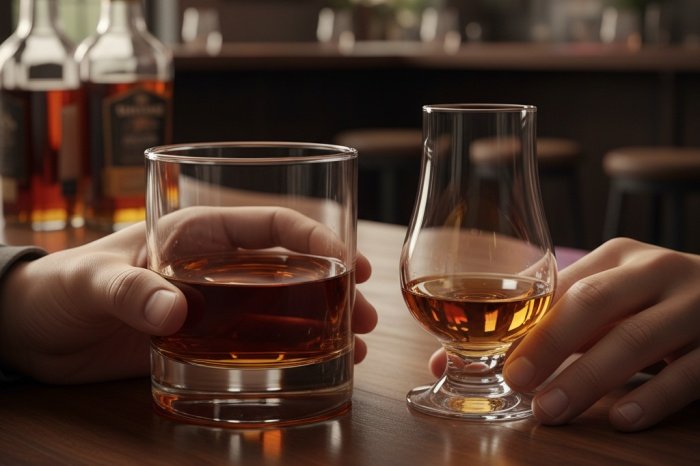
Stemless wine glasses are wine vessels that feature a traditional bowl shape but sit flat on a stable base rather than a stem. They are designed to provide the aeration benefits of a wine glass while eliminating the top-heavy breakage risks associated with traditional stems.
How Stemless Glasses Are Different from Traditional Wine Glasses
When we discuss stemless glassware with our wholesale clients at DM Glassware, we often have to correct the misconception that these are just fancy water tumblers. The anatomy of a high-quality stemless glass is quite specific and engineered with purpose. The “bowl”—the crucial part of the glass that holds the wine—is often identical in geometry to its stemmed counterpart. The key difference lies in the removal of the stem and foot, allowing the bowl to sit directly in the palm of your hand.
This design shift moves the center of gravity significantly lower. In a commercial environment, this is a massive operational detail. A lower center of gravity makes the glass far less prone to tipping over on a busy restaurant table, a wobbling tray, or a windy outdoor patio. For the drinker, the experience changes from a delicate balancing act to a more grounded, secure hold.
For a business buyer, this “casual and modern design” translates to a specific atmosphere. It signals to your customer that your venue is relaxed, contemporary, and approachable. It strips away the pretension sometimes associated with high-stemmed crystal, making it a popular choice for gastropubs, modern bistros, and trendy wine bars that focus on farm-to-table concepts rather than white-glove service.
Why They Became So Popular
The surge in popularity isn’t just about aesthetics; it is fundamentally about economics and lifestyle shifts. For the hospitality industry, the stem is the “Achilles’ heel” of glassware. It is the first thing to snap during hand polishing, the first thing to break in the dishwasher, and the first thing to shatter when a customer gestures too wildly. By removing the stem, you are removing the weakest link in your hardware.
From our manufacturing perspective, we have seen orders for stemless ware skyrocket because they solve three major pain points for buyers:
Fewer Broken Stems: Our internal data and client feedback suggest that venues switching to stemless options see a significant reduction in breakage rates, specifically during the washing and drying process. This improves the “cost per use” metric of your inventory.
Easier to Store: Without the height of the stem and the wide footprint of the base, you can store nearly double the amount of glassware in the same cabinet space. For bars with limited shelving or high-volume events requiring hundreds of glasses, this spatial efficiency is a game-changer.
Trendy Look: They fit the minimalist aesthetics that dominate current interior design. They look just as good holding water, cocktails, or juice as they do wine, offering versatility that stemmed glasses cannot match.
Are Stemless Wine Glasses Actually Good for Wine?
Yes, for casual drinking and robust wines, they perform perfectly well. However, for serious wine tasting or delicate vintages, they are technically inferior because the lack of a stem forces the drinker to warm the wine with their hand.
The Short Honest Answer
If you are running a bustling patio brunch, a wedding reception, or a high-volume dinner service where the “house red” is the top seller, stemless glasses are absolutely “good” for the wine. The average consumer is prioritizing the social experience, the atmosphere, and the conversation over the micro-nuances of temperature control. In these settings, the practical benefits outweigh the minor technical drawbacks. Most patrons will not notice the slight temperature rise in a glass of Merlot consumed over 20 minutes with a burger.
However, if you are a fine dining establishment serving aged Bordeaux, Grand Cru Burgundies, or vintage Champagnes, the answer shifts to “no.” In these scenarios, the ritual of the pour, the visual inspection of the legs, and the precision of the tasting experience are part of the price tag. Using a stemless glass here can feel like a cost-cutting measure to a discerning guest who expects the traditional “pomp and circumstance” of wine service.
What Wine Experts Usually Say
There are three main factors experts critique: Temperature, Aroma, and Smudging.
As someone who has used these glasses at home for years, I can tell you the temperature issue is real. When you hold the bowl, your hand acts as a heater. For a chilled Sauvignon Blanc, this is a problem; the wine loses its crispness too fast.
Secondly, the “swirl”—that essential motion to release aromas—is mechanically different without a stem. You have to swirl the glass on the table or use a different wrist motion, which can be less effective at aerating the wine if the glass is too full.
Lastly, there is the visual aspect. A stemless glass inevitably gets covered in fingerprints. While this doesn’t change the taste, it does affect the visual clarity of the wine, which is the first step in professional tasting. For a restaurant, this means your beautiful presentation can look messy halfway through the meal.
How Stemless Wine Glasses Affect Taste and Aroma
Stemless glasses affect taste primarily through temperature change. The heat from your hand warms the bowl, which can make red wines taste “flabby” (too alcoholic) and white wines lose their refreshing acidity. Additionally, the hand’s proximity to the nose can introduce competing scents (like hand soap or perfume).
Hand Heat and Wine Temperature
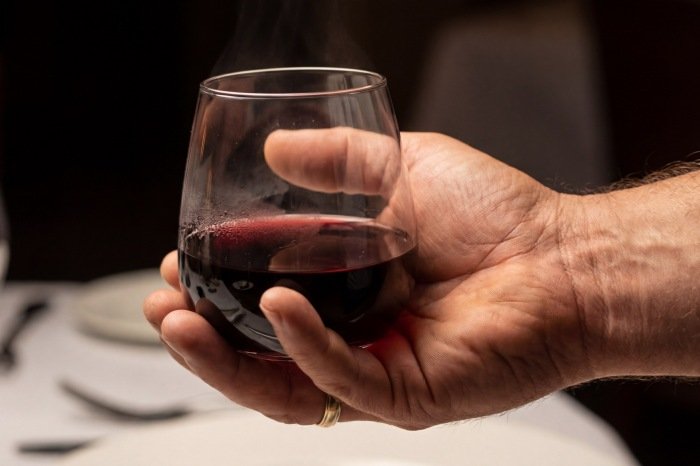
Temperature is a flavor magnifier. When wine is served at the correct temperature, the alcohol, acid, and tannins are in balance. The physics here are simple but impactful. The average human hand is roughly 98.6°F. The ideal serving temperature for white wine is 45-50°F, and for red wine, it is 60-65°F.
White and Sparkling Wines: These rely on a chill to maintain their “crisp” structure. When you hold a stemless glass, your body heat transfers through the glass wall into the liquid. A chilled Chardonnay can warm up to room temperature in under 15 minutes of continuous holding. Once warm, the acid feels less sharp, and the wine can taste flat and heavy.
Red Wines: While we drink reds “warmer,” we ideally want them at “cellar temperature,” not “hand temperature.” If a heavy Cabernet gets too warm, the alcohol fumes start to dominate the aroma, masking the subtle fruit notes. The wine loses its tightness and structure.
Aroma Changes Without a Stem
The shape of the bowl is what concentrates the aroma (the bouquet). Fortunately, high-quality wholesale glassware like ours maintains the correct “tulip” shape. They taper at the top to trap the scent.
However, there is a subtle interference factor: your hand. When you lift a stemless glass, your fingers are inches from your nose. If a customer has used strongly scented hand sanitizer, handled savory food (like garlic fries), or is wearing heavy perfume, those scents can mix with the wine’s aroma profile. With a stemmed glass, the hand is positioned far enough away that this is rarely an issue. This “olfactory interference” is why professional tasters will always reject stemless ware for critical evaluations.
When Stemless Wine Glasses Make Sense
Stemless glasses are the ideal choice for casual dining, outdoor patios, poolside service, and high-turnover events. They are best used in environments where stability and breakage reduction are more critical to the business model than formal presentation.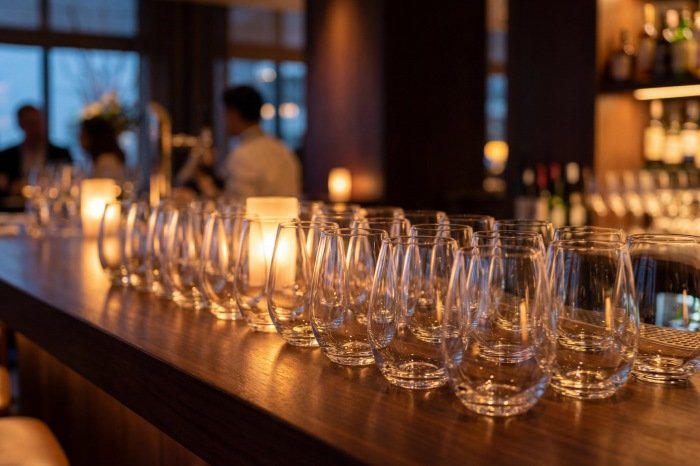
Casual Drinking at Home and Venues
For the vast majority of “Tuesday night” wine drinkers or casual lunch spots, the stemless glass is perfect. It removes the anxiety of knocking over a tall, fragile object. If your venue hosts “Movie Nights,” trivia events, or serves food on small, crowded tables (tapas style), the low profile of a stemless glass prevents accidents. It allows the guest to relax completely without guarding their glass.
Outdoor and Informal Settings
This is the biggest market for our commercial clients.
Patios and Rooftops: Wind is a real enemy of stemmed glassware. A gust of wind can easily topple an empty or half-full stemmed glass, leading to broken glass on a patio—a safety hazard that halts service. Stemless glasses are bottom-heavy and aerodynamic; they stay put.
Poolside and Picnics: While glass is often banned near pools, many high-end venues use heavy-weighted stemless glass (or high-quality acrylic alternatives that mimic glass) because they are stable on uneven surfaces like grass or lounge chair side tables. They fit the “leisure” vibe perfectly.
For People Who Break Glasses Often
Let’s talk about your “Breakage Rate.” In the restaurant industry, glassware is a consumable asset.
No thin stem to snap: The stem is responsible for over 60% of glassware breakage in commercial dishwashers and during polishing. Eliminate the stem, and you eliminate the break.
More stable on tables: They are harder to knock over with a stray elbow or a clumsy reach.
For a B2B buyer, this means your “Cost Per Use” drops dramatically. You aren’t buying replacements every month; you are buying them once a season. When you calculate the ROI on stemless versus stemmed over a year, the savings on breakage alone often pay for the initial inventory investment.
When You Should Avoid Stemless Wine Glasses
Avoid stemless glassware for formal weddings, fine dining tasting menus, and high-end wine education events. In these settings, the lack of a stem prevents proper swirling and temperature control, and fails to meet the aesthetic expectations of a luxury price point.
Wine Tasting and Wine Education
If you are hosting a winemaker dinner or a paid tasting flight, you must use stemmed glass. The participants are there to analyze the color, viscosity (legs), and unadulterated aroma of the wine.
Harder to judge color: You cannot hold a stemless glass up to the light by the base easily to check clarity without your hand blocking the view. The fingerprints on the bowl further obscure the visual analysis.
Temperature control: In a tasting, you might spend 20 minutes analyzing just one ounce of wine. In a stemless glass, that ounce will be warm and unpalatable long before the tasting is over, ruining the educational experience.
Formal Events and Restaurants
Perception is reality in hospitality. If a guest is paying $150 for a bottle of Barolo, they expect the “ceremony” of the stemmed glass. A stemless glass feels like a “water glass” or a “juice cup” in this context. It lowers the perceived value of the wine and the establishment.
Furthermore, in white-tablecloth service, servers are trained to pour without touching the table. A stemmed glass is easier for a server to refill elegantly. Refilling a stemless glass often requires the server to reach further across the guest or pick up the glass by the rim—a major service taboo. This physical interaction can feel intrusive in a fine dining setting.
Warm Rooms or Summer Parties
If your venue has poor air conditioning or you are serving outdoors in July, stemless glasses will accelerate the warming of the wine. Unless you have a rapid ice bucket service, the last few sips of every glass will be warm. In these environments, the stem acts as a necessary buffer against the ambient heat and the body heat of the guest.
Stemless vs Stemmed Wine Glasses: Side-by-Side Comparison

The choice comes down to a trade-off: Stemless glasses offer high durability and lower storage costs, while stemmed glasses offer superior temperature control and traditional elegance. Your decision should be based on your venue’s average ticket price and operational style.
Practical Differences That Matter
As a buyer, you aren’t just buying a glass; you are buying a tool for your staff. Understanding the operational impact of these two styles is crucial for your workflow.
| Feature | Stemless Glassware | Stemmed Glassware |
| Temperature Control | Low. Hand heat transfers directly to the wine. | High. Stem isolates the bowl from body heat. |
| Ease of Storage | High. Can often be stacked or shelved on low racks. | Lower. Requires hanging racks or tall shelf height. |
| Elegance | Casual. Best for bistros, bars, and family style. | Formal. Required for fine dining and weddings. |
| Breakage Risk | Lower. No stem to snap; lower center of gravity. | Higher. Stems snap easily in polishing/washing. |
| Dishwasher Capacity | High. You can fit 20-30% more per rack. | Standard. Wide bases and height limit capacity. |
| Versatility | High. Can serve water, juice, cocktails. | Low. Strictly for wine. |
For many of our clients, the Dishwasher Capacity is the hidden metric that drives the decision. If your barback can wash 30 glasses in a rack instead of 20, you turn tables faster and reduce the backlog on a Friday night. That efficiency translates directly to profit. Additionally, the versatility of stemless wine glasses allows you to use the same vessel for a morning juice service and an evening wine service, reducing the total number of SKUs you need to manage.
Which Wines Work Best in Stemless Glasses?
Red wines, particularly bold varieties like Cabernet and Merlot, are the best candidates for stemless glasses as they are less sensitive to warming. Delicate white wines and sparkling Champagnes struggle in stemless glasses due to rapid temperature loss.
Red Wines That Are More Forgiving
Red wines are generally served warmer than whites (around 60°F-65°F). Because the gap between the serving temperature and your hand temperature is smaller, the heat transfer is less shocking to the wine.
Cabernet Sauvignon, Merlot, Zinfandel: These big, bold reds have strong tannic structures and intense flavors that aren’t easily “muted” by a slight rise in temperature. In fact, if a red is served too cold from a cellar, the heat from a stemless glass can actually help “wake up” the aromas faster, helping the wine “open up.”
Everyday Table Wines: For house pours, blends, and sangrias, the stemless glass is the industry standard. These wines are consumed quickly and casually, making the glass format less critical to the flavor profile.
Wines That Struggle in Stemless Glasses
Sparkling Wine / Champagne: We strongly advise against using standard stemless tumblers for Champagne. The wide surface area kills the bubbles (carbonation) too quickly, and the hand heat makes the wine foam aggressively. Unless you are buying specific stemless flute shapes, stick to stems for the bubbly.
Crisp White Wines: A Sauvignon Blanc, Pinot Grigio, or Riesling relies on zesty acidity. As it warms, that acidity feels less sharp and the wine tastes “flabby.” If you serve these stemless, you run the risk of the guest enjoying the first sip but disliking the last sip. If you must use stemless for these, instruct staff to pour smaller portions more frequently so the wine doesn’t sit in the hand long enough to get warm.

How to Use Stemless Wine Glasses the Right Way
To optimize the stemless experience, train staff to under-pour slightly to allow for swirling without spillage, and chill white wines 2-3 degrees lower than normal to compensate for the anticipated hand warming. Always choose a bowl shape that tapers inward to preserve aromatics.
Simple Tips to Improve the Experience
If you are rolling out stemless glasses in your venue, a few simple tweaks to your service standards can mitigate the downsides. Add these points to your pre-shift meeting:
Hold Lower: Encourage customers (by example) to hold the glass near the base, not the middle. The base is the thickest part of the glass and conducts heat the slowest.
Don’t Overpour: Without a stem to balance it, a full stemless glass feels heavy and clumsy. Only fill it to the widest part of the bowl (usually 4-5 oz). This leaves room for the customer to swirl the wine to release the aroma without splashing it onto your tablecloths. A heavy pour in a stemless glass looks messy and cheap.
Chill Whites Slightly More: Set your white wine fridge to 42°F instead of 45°F. That thermal buffer gives the customer an extra 10 minutes of drinking time before the wine enters the “warm zone.”
Choosing the Right Bowl Shape
Not all stemless glasses are created equal. You want to avoid straight-sided tumblers (like water glasses). You need a glass that curves inward at the rim.
Bigger bowl = better aroma: You still need surface area for the wine to breathe.
Thin rim improves mouthfeel: A thick, rolled rim feels like a coffee mug. A laser-cut, thin rim (like those found on our premium lines) tricks the brain into perceiving the wine as higher quality.
Check out our custom logo glassware options to see how we can etch your brand onto these modern bowls. Since stemless glasses have a larger, flatter surface area than curved bowls, they are actually easier to brand with your logo, turning a functional vessel into a marketing tool.
Final Verdict: Are Stemless Wine Glasses Worth It?
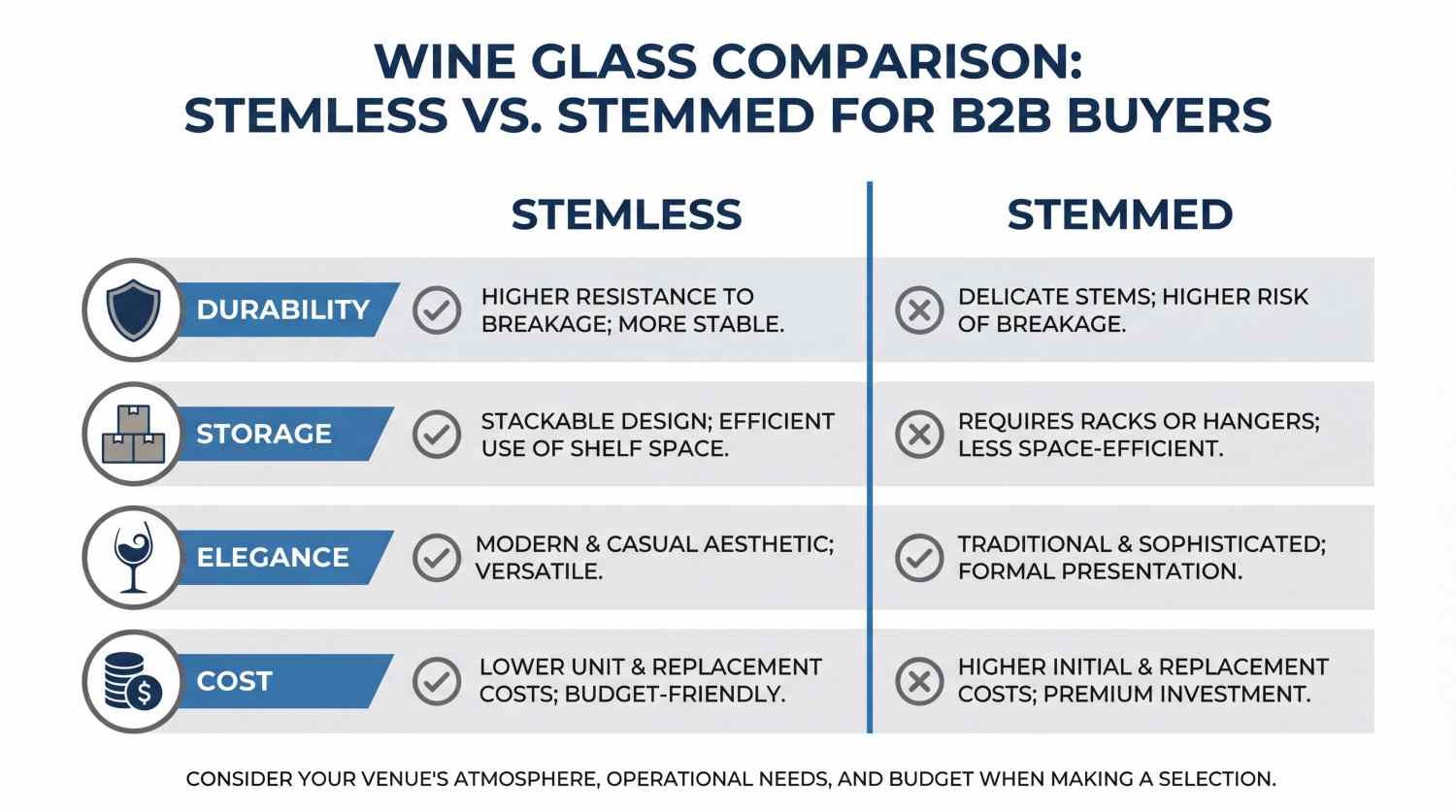
For the modern B2B buyer, stemless wine glasses are absolutely worth the investment. While they shouldn’t replace your entire stock of crystal stems, they are the most profitable solution for high-volume service, outdoor dining, and casual events due to their durability and low replacement costs.
Perfect for Everyday Wine Lovers
If your target demographic is the “after-work drink” crowd, the “patio brunch” group, or the “family dinner” setting, stemless glasses are a home run. They feel good in the hand, they look modern, and they don’t break when someone laughs too hard and bumps the table. They align with the way people actually drink wine today—casually and frequently.
Not a Replacement for Proper Tasting Glasses
Do not throw away your stems. Keep a supply of traditional stemmed ware for your “Reserve List” wines, your sparkling wines, and your customers who simply prefer the old-school elegance. There will always be a customer who wants the traditional experience, and being able to provide it is a mark of good service.
Best When Used for the Right Moment
The smartest venues use a hybrid approach. Use stemless for water, cocktails, and wines by the glass (tier 1 and 2). Use stems for bottles over a certain price point. This segmentation saves you money on the high-volume items while preserving the premium experience where it counts.
At DM Glassware, we specialize in helping you build this mixed inventory. Whether you need 500 durable stemless cups for a festival or 50 exquisite stems for your chef’s table, we have the manufacturing capacity to deliver exactly what your business needs to succeed.
Conclusion
Stemless wine glasses are a smart operational choice for modern venues, balancing style with durability. While they sacrifice some thermal control, their lower breakage rates and versatility make them essential for profitability in high-volume settings.