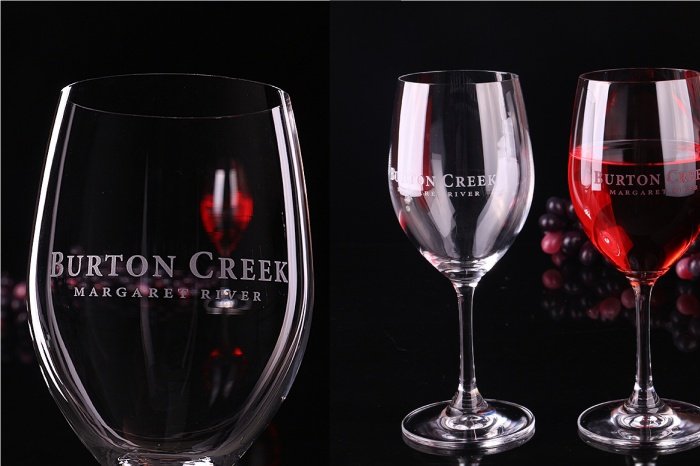
For wholesale distributors, supermarket procurement teams, and promotional gift buyers, branded drinkware is a highly effective merchandising tool. Whether you are stocking retail shelves with a new homeware brand or supplying corporate events, adding a logo to a wine glass requires technical consideration. The decoration method you choose directly impacts the unit cost, visual appeal, and long-term durability of the product.
When manufacturing custom logo wine glasses, procurement managers must evaluate three primary decoration techniques based on their specific project needs:
Screen Printing: The most cost-effective solution for large-volume orders requiring simple, single-color logos.
High-Temperature Decals: The best choice for complex, multi-color designs, offering commercial dishwasher durability.
ലേസർ കൊത്തുപണി: Provides a permanent, colorless, frosted effect that conveys a premium and luxury feel for high-end retail or corporate gifts.
If you are planning to source branded stemware, this guide compares these three methods to help you make a data-driven purchasing decision.
Bypassing Middlemen for Branded Glassware
Before selecting a printing method, the most critical decision a buyer makes is choosing the right supply chain partner. Sourcing custom logo wine glasses through a trading company introduces unnecessary markups and increases the risk of miscommunication regarding your brand guidelines.
By working with a direct source factory like DM Glassware, you bypass the middlemen entirely. This direct relationship allows you to secure authentic factory-direct pricing, which significantly improves your profit margins—especially on high-volume promotional orders. Direct sourcing also ensures that your technical requirements, from exact Pantone color matching to specific logo placements, are executed directly by the production engineers.
Method 1: Screen Printing (Cost-Effective for Volume)
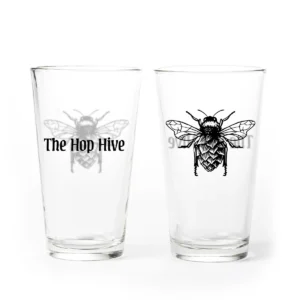
Screen printing involves pressing ink through a stenciled mesh screen directly onto the surface of the glass, followed by a curing process.
പ്രോസ്: It is highly efficient and extremely cost-effective for large production runs. The ink application is fast, making it ideal for tight deadlines.
ദോഷങ്ങൾ: It is generally limited to one or two solid colors. Complex gradients or highly intricate, multi-colored designs are difficult to achieve with standard screen printing on curved glass surfaces.
മികച്ചത്: Supermarket retail lines, large-scale promotional giveaways, and event catering where a simple, single-color logo is required at the lowest possible unit cost.
Method 2: High-Temperature Decals (Durability and Color)
The decal process (often referred to as water transfer printing or baking) involves printing a design onto a special paper, applying it to the glass, and baking it in a high-temperature kiln (typically between 500°C and 600°C). This melts the glass glaze, allowing the logo to fuse permanently with the glass surface.
പ്രോസ്: Decals offer excellent color accuracy and can easily handle complex, multi-color logos and wrap-around designs. Because the design is baked into the glass, it provides superior resistance to scratching and fading.
ദോഷങ്ങൾ: The manual application of the decal and the secondary baking process increase the labor and energy costs, making it slightly more expensive than basic screen printing.
മികച്ചത്: Retail brands, winery tasting rooms, and restaurant chains that require their custom logo wine glasses to survive thousands of cycles in commercial dishwashers without the logo peeling.
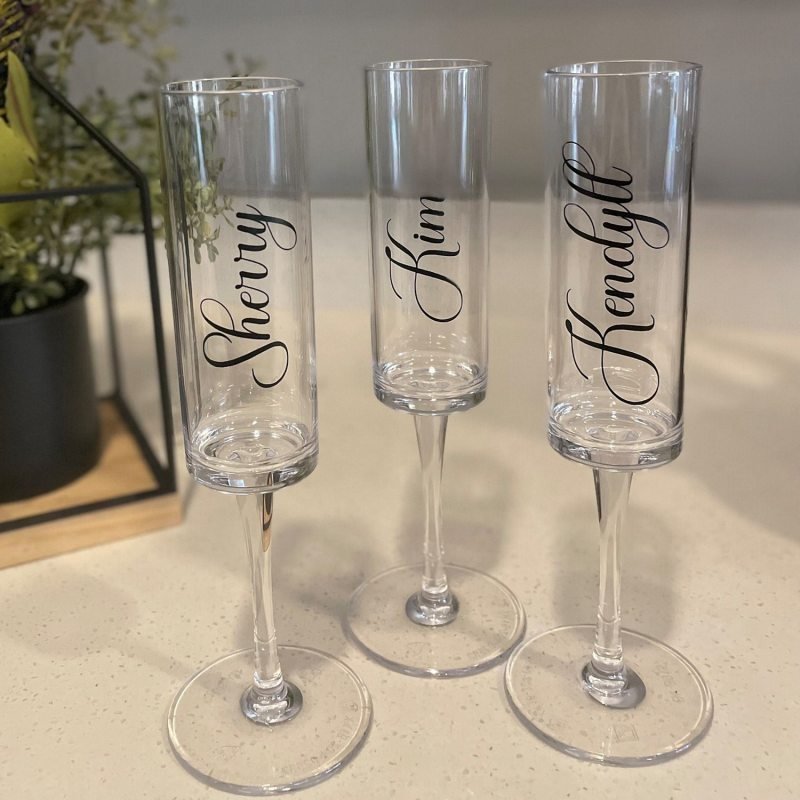
Method 3: Laser Engraving (Premium and Permanent)
ലേസർ കൊത്തുപണി uses a focused beam of light to micro-fracture the surface of the glass, creating a precise, frosted appearance.
പ്രോസ്: The result is 100% permanent. It will never wash off, fade, or peel. It gives the glass an upscale, sophisticated aesthetic that consumers associate with luxury crystal.
ദോഷങ്ങൾ: It does not allow for color. The logo will always appear as a frosted white/grey against the clear glass. It is also a slower process per unit compared to screen printing.
മികച്ചത്: Corporate executive gifts, luxury hospitality, and high-end retail gift sets where brand perception is more important than bright colors.
Ready to evaluate which custom stemware option fits your budget?
Meeting Deadlines: Our 950,000-Piece Daily Capacity
Choosing the right logo application is only half the process; receiving the goods on time is the other. A common failure point in B2B sourcing is a factory lacking the capacity to fulfill large customized orders during peak seasons.
At DM Glassware, we operate 4 multi-channel kilns and 25 automated production lines. Our daily output reaches a massive 950,000 pieces. This heavy-asset infrastructure guarantees that our lead times remain incredibly stable. Whether you need a 40HQ container of screen-printed tumblers for a summer promotion or laser-engraved wine glasses for the Q4 holiday rush, we have the manufacturing scale to deliver your order exactly on schedule.

Protecting Your Investment: Shatterproof Ocean Freight Packaging
The final hurdle in international glassware procurement is ocean freight. Investing in high-quality printed glass is useless if the products arrive broken. Branded items often require specific retail packaging, adding another layer of complexity to shipping.
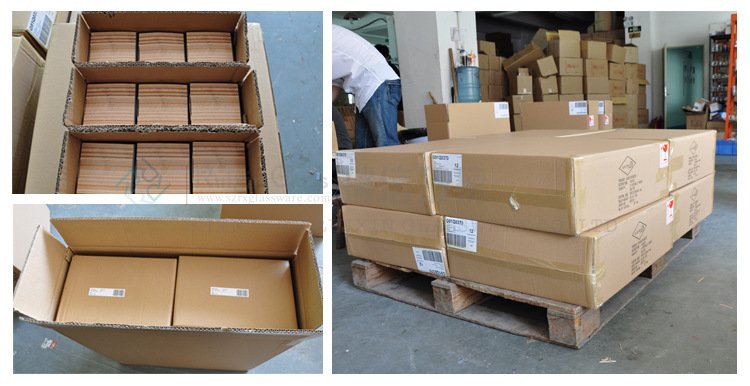
We provide complete ocean freight shatterproof packaging solutions. We do not use standard, flimsy paper dividers. Instead, we engineer our cartons using rigid E-flute corrugated cardboard to isolate each glass and absorb impact. For retail and gift buyers, we can design custom color boxes (2-packs, 4-packs, or 6-packs) with secure internal padding. All export cartons are then strictly palletized, shrink-wrapped, and corner-protected to ensure a 0% breakage target from our factory floor to your warehouse.
പതിവായി ചോദിക്കുന്ന ചോദ്യങ്ങൾ (പതിവ് ചോദ്യങ്ങൾ)
Q1: Which logo method is the safest for commercial dishwashers?
High-temperature decals and laser engraving are both excellent for commercial use. Laser engraving is physically permanent, while high-temperature baked decals fuse with the glass surface, making them highly resistant to the chemicals and heat of commercial dishwashers.
Q2: What is the standard MOQ for custom logo wine glasses?
As a mass-production factory, our standard Minimum Order Quantity (MOQ) for custom printing typically starts at 10,000 pieces per design. This volume allows us to absorb the setup costs of screens or decal plates and offer you the most competitive factory-direct price.
Q3: Can you match our specific corporate Pantone colors?
Yes. For screen printing and decal methods, our production engineers can match your exact Pantone (PMS) color codes to ensure strict adherence to your corporate brand guidelines.
Q4: How do you ensure the inks used for custom logo wine glasses comply with US and EU heavy metal regulations?
We strictly utilize lead-free and cadmium-free pigments for all screen printing and high-temperature decal applications. Industry Tip for Buyers: A common hidden risk in low-cost glassware sourcing is the use of leaded frits. Some cheaper factories use lead to lower the melting point of decal colors, saving energy costs, but this will immediately fail FDA or California Proposition 65 testing at customs. Before signing a contract, always demand a recent, third-party test report (like SGS or Intertek) that specifically tests the decorated area of the glass, not just the blank transparent vessel.
Q5: When ordering 50,000+ pieces, how do you maintain exact logo placement consistency across different production batches?
We achieve exact consistency by utilizing automated optical alignment and CNC-guided printing fixtures on our production lines, rather than relying solely on manual application. Industry Tip for Buyers: Applying decals or screen prints to the curved surface of a wine glass bowl naturally invites vertical or horizontal drifting if done manually. To mitigate this, our AQL (Acceptable Quality Limit) inspections specifically measure the millimeter tolerance from the rim to the top edge of the logo. When drafting your Purchase Order (PO) with any manufacturer, explicitly state your acceptable logo placement tolerance (e.g., ± 2mm) to ensure strict accountability.
Q6: How can I verify the commercial dishwasher durability of a printed logo before committing to a full container order?
We strongly encourage all our B2B partners to request Pre-Production Samples (PPS) and conduct physical stress tests before authorizing mass production. Industry Tip for Buyers: Visual inspection is never enough to judge print adhesion. Once you receive the PPS from a factory, perform the “Tape Test”: apply strong 3M adhesive tape firmly over the logo and rip it off quickly. A properly baked high-temperature decal will not lift or flake. Furthermore, run the sample through a commercial high-temp dishwasher (at least 85°C / 185°F) for 50 to 100 continuous cycles to verify that the Pantone colors do not fade or bleed.
Partner with a Factory That Understands Your Brand
Procuring customized glassware requires a partner who understands the balance between cost, aesthetic quality, and safe logistics. By sourcing directly from a factory with a 950,000-piece daily capacity and engineered shatterproof packaging, you secure your profit margins and protect your brand image.
Skip the trading companies and work directly with the manufacturer.
👉 Contact the DM Glassware B2B Sales Team for a Free Quote and Custom Sample Today